

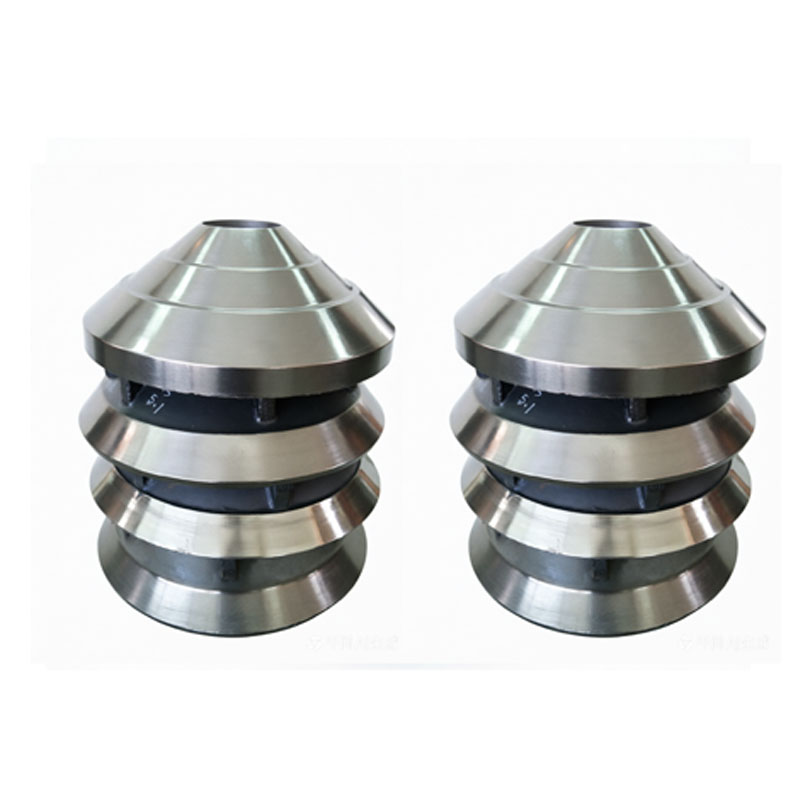
Moving Cone Liner / Mantle
Our Services
1.Before sales, we will fully understand the customer's working conditions and recommend the most appropriate material selection to the customer.
2.Provide customers with drawings based on their machine models, spare parts dimensions, etc.
3.After sales, we will continue to pay attention to the usage of the product and provide timely help.
4.Ensure that the quality of the purchased components is impeccable, and the technical parameters absolutely meet national standards.
5.Provide free quotation, worldwide sales, short delivery cycle, low price.
In the spare parts system of cone crushers, the mantle (Mantle / Moving Cone Liner)—also commonly referred to as the moving cone liner or moving cone jaw plate—is one of the most critical wear-resistant consumables. It is installed directly onto the moving cone body and performs high-frequency gyratory motion along with it. Together with the stationary bowl liner (fixed cone liner), it forms the crushing chamber to compress, cleave, and bend materials.
Below is a detailed breakdown across four dimensions: core functions and working principles, materials and manufacturing processes, installation guidelines, and common faults and maintenance.
1. Core Functions and Working Principles
Direct Material Crushing: The mantle is the component that directly engages with the material. Driven by the eccentric sleeve, it periodically approaches and moves away from the bowl liner, crushing the ore that falls into the crushing chamber.
Determining Discharge Size and Shape: The minimum distance between the mantle and the bowl liner (the closed-side setting, CSS) directly determines the coarseness of the finished product. Additionally, the cavity design of the liner (such as the length of the parallel zone) has a decisive impact on the product shape (e.g., the flakiness and elongation index).
Withstanding Extreme Loads: When crushing hard ores, the mantle must not only endure massive axial and radial impact forces but also withstand high-frequency friction and shear forces.
2. Materials and Manufacturing Processes
Due to the extremely harsh operating conditions, the mantle material must possess a "hard exterior and tough interior" characteristic:
Mainstream Materials: The most commonly used material is high manganese steel (e.g., ZGMn13, Mn18Cr2). High manganese steel exhibits extreme work-hardening characteristics; under intense impact and compression from the ore, its surface hardness increases dramatically (reaching HB 500 or above), while the core maintains high toughness. This ensures it "gets harder as it wears and resists impact without chipping."
High-End Composite Materials: For processing extremely hard materials like granite and basalt, some manufacturers adopt metal-ceramic composite materials or tungsten carbide insert technologies. High-hardness wear-resistant blocks are embedded into the working surface of the liner to multiply its service life.
Heat Treatment Process: Strict water-toughening treatment is mandatory to eliminate casting stresses and obtain a single-phase supersaturated austenitic structure. This is the key to ensuring its toughness and work-hardening potential.
3. Installation Guidelines
Many cases of premature cracking or loosening of mantles are not due to quality issues, but rather improper installation:
Filling and Fit: There must be no gaps between the mantle and the moving cone body. Zinc alloy casting or epoxy resin filling is typically required to buffer impacts and ensure uniform load distribution. The filler must be mixed evenly, and sufficient curing time must be allowed (generally requiring about 16 hours).
Leveling and Alignment: During installation, the contact surface between the liner and the cone must be cleaned thoroughly, and the liner must be leveled and aligned properly. If it is tilted to one side, uneven force distribution during crushing can easily lead to liner cracking or loosening of the locking bolts.
Fastening and Welding: Locking bolts must be tightened to the specified torque. In some designs, a pressing cutting ring is located at the top of the liner; this must be welded securely to the liner to prevent loosening.
Initial Inspection: After 6 to 8 hours of operation with a newly installed or replaced mantle, the equipment must be shut down to check the fastening condition. Any looseness must be tightened immediately.
4. Common Faults and Daily Maintenance
Cracking and Failure:
Causes: Improper installation, starting the machine before the filler has fully cured, loose locking bolts, or frequent entry of uncrushable iron blocks into the crushing chamber (tramp iron).
Countermeasures: Standardize the installation process; install an electromagnetic iron remover at the head of the feed conveyor belt to prevent iron blocks from entering the crushing chamber.
Excessive Wear and Coarse Discharge:
Symptoms: As the liner wears, the crushing chamber profile changes, and the discharge opening widens, leading to decreased output and coarser discharge.
Countermeasures: Inspect the liner's wear condition daily. When the liner's wear reaches 60%-70% of its original thickness, the remaining thickness is less than 1/3 of the original, or penetrating cracks appear, it must be replaced immediately to prevent damage to the moving cone body.
Abnormal Vibration:
Causes: Severe uneven wear or loosening of the liner.
Countermeasures: Shut down the machine for inspection, and retighten or replace the liner as necessary.
Relevant parts
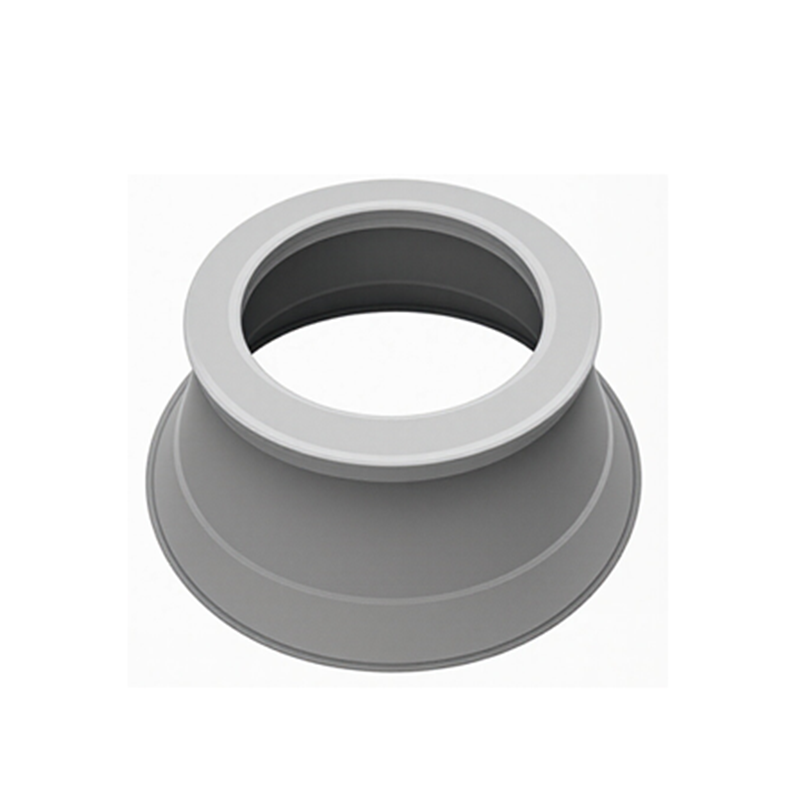
Concave, Bowl Liner, Fixed Cone Liner
- Categories : Cone Crusher
- Customization Available : Yes
Service Process
The company's sales network covers all major cities across China, while our R&D and manufacturing products have reached numerous countries and regions in Southeast Asia, the Middle East, Africa, Europe, and beyond, earning widespread acclaim from customers worldwide.
FAQs
We have 30+ years of industry experience, a professional team of engineers, strong production strength and mature equipment.
The company has a complete accessory system to provide you with reliable and fast accessory services, complete models, high-quality and durable accessories.
Engineers personally go to the site for technical training in installation, operation and maintenance to help you solve installation and operation problems.
We provide lifelong service for the equipment we sell, including post-maintenance services.
We have professional technical experts and service teams to tailor solutions for each customer.
The mainframe is designed for continuous heavy-duty operation. Wear parts such as jaw plates, liners and blow bars are made of high-manganese steel or alloy materials, and their service life depends on the material hardness and working hours.
Every machine goes through material inspection, machining inspection, assembly and a full no-load test run before shipment. Inspection records and test videos are provided to customers.
Warmly welcome. You can visit our manufacturing base in person, and remote video inspection is also available for customers from overseas.
Yes. Package orders of a full line or multiple machines usually receive a more favorable price and priority in the production schedule.
Large mainframes are shipped by sea in containers or bulk vessels; smaller machines and spare parts go by container, air freight or international express, with full packaging for moisture and rust protection.