

Screen Mesh / Screen Panel
Our Services
1.Before sales, we will fully understand the customer's working conditions and recommend the most appropriate material selection to the customer.
2.Provide customers with drawings based on their machine models, spare parts dimensions, etc.
3.After sales, we will continue to pay attention to the usage of the product and provide timely help.
4.Ensure that the quality of the purchased components is impeccable, and the technical parameters absolutely meet national standards.
5.Provide free quotation, worldwide sales, short delivery cycle, low price.
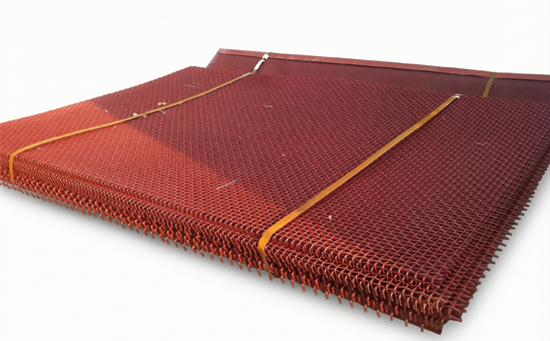
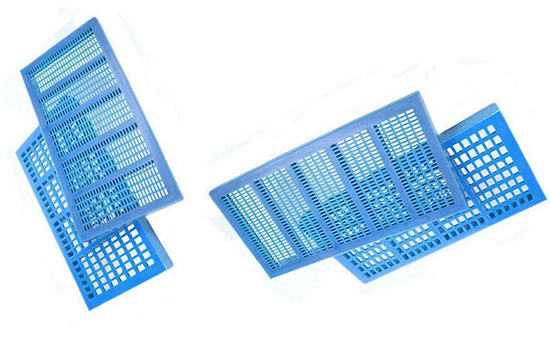
In the spare parts system of vibrating screens, the screen mesh (or screen panel) is the "heart" and core working component of the equipment. It directly determines the classification accuracy, throughput (capacity), and operational stability of the equipment. The screen mesh acts as an "intelligent gate," utilizing vibration energy to allow materials smaller than the aperture to pass through while retaining and discharging those larger than the aperture.
1. Core Functions
Precise Classification (Primary Role)
The mesh count or aperture size of the screen mesh directly determines the specification of the finished product.
Coarse Screening: Apertures of 5-50mm, used for pre-screening or grading large-sized materials.
Medium Screening: Apertures of 0.5-5mm, used for grading construction aggregates and chemical granules.
Fine/Ultra-fine Screening: Apertures <0.5mm (35 mesh and above), used for fine chemical, food, and pharmaceutical powder classification.
Key Point: Screen mesh wear that enlarges the aperture will directly lead to "oversize" issues (large particles mixing into the finished product), causing quality accidents.
Balancing Screening Efficiency and Throughput
The open area of the screen mesh affects the capacity.
High Open Area: Materials pass through quickly with high throughput, but the wires are thinner, which may shorten the service life.
Low Open Area: Thicker wires offer better wear resistance, but they are prone to blinding (clogging), which reduces throughput.
Application Scenario: For wet screening or sticky materials, it is essential to choose screen meshes with a high open area or anti-blinding structures (such as wave-shaped or harp/combi screens).
Self-cleaning and Anti-blinding
Under the action of vibration, the screen mesh generates secondary micro-vibrations that help dislodge particles stuck in the apertures. For difficult-to-screen materials, anti-blinding screen meshes must be selected (such as harp screens, ball-tray structures, or ultrasonic screen systems).
2. Structural Types
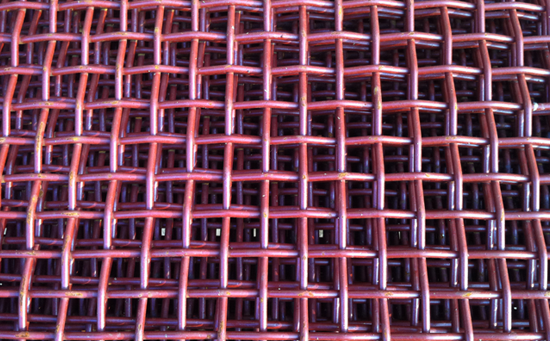
Woven Wire Mesh:
The most universal type, featuring low cost and comprehensive specifications.
Common weaves include: Plain weave (for precision), Twill weave (for wear resistance), and Wave/Double-crimp weave (for anti-blinding, utilizing secondary vibrations).
Perforated Plate:
Made by punching holes in steel plates, it offers high strength and resistance to deformation, but has a lower open area (30%-60%).
It is used for large-sized materials (>20mm) or in applications with extremely high wear-resistance requirements.
Wedge Wire / Harp Screen:
Features V-shaped welded wires with a top-narrow, bottom-wide profile, making it anti-blinding with extremely high screening efficiency.
It is used for dewatering, desliming, and sticky materials (such as coal slime and wet sand).
Frame Mesh:
The screen mesh is tensioned onto a steel frame for whole-piece replacement. Screen replacement takes only 5 minutes without the need for on-site tensioning.
This is the mainstream configuration for modern large-scale vibrating screens.
3. Common Faults and "Lifesaving" Maintenance
Screen Mesh Breakage/Fracture
Causes: Insufficient tension (causing the screen mesh to slap against the frame), excessive material impact, or metal fatigue.
Countermeasures: Check if the tensioning bolts are loose; add buffer liners or scrap conveyor belts at the inlet of large-sized materials for cushioning; ensure uniform tensioning during replacement.
Blinding/Clogging
Causes: High moisture content in the material, excessive mud content, or excessively fine mesh counts.
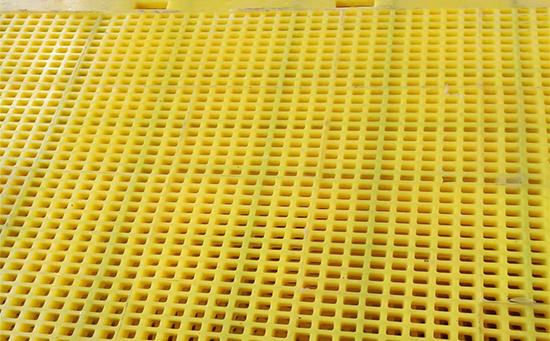
Countermeasures: Switch to wave-shaped screen meshes or polyurethane anti-blinding meshes; install bouncing balls or ultrasonic systems; adjust the incline angle of the vibrating screen (increasing the angle improves screening efficiency but reduces throughput).
Oversize / Unqualified Particle Size
Causes: Worn or perforated screen mesh, sagging in the middle after tensioning, or incorrect installation direction (e.g., the direction of the burrs on a perforated plate).
Countermeasures: Regularly verify the screening effect using standard samples; check if the screen surface is flat; confirm that the burrs are facing downward (for perforated plates).
Relevant parts
Service Process
The company's sales network covers all major cities across China, while our R&D and manufacturing products have reached numerous countries and regions in Southeast Asia, the Middle East, Africa, Europe, and beyond, earning widespread acclaim from customers worldwide.
FAQs
We have 30+ years of industry experience, a professional team of engineers, strong production strength and mature equipment.
The company has a complete accessory system to provide you with reliable and fast accessory services, complete models, high-quality and durable accessories.
Engineers personally go to the site for technical training in installation, operation and maintenance to help you solve installation and operation problems.
We provide lifelong service for the equipment we sell, including post-maintenance services.
We have professional technical experts and service teams to tailor solutions for each customer.
The mainframe is designed for continuous heavy-duty operation. Wear parts such as jaw plates, liners and blow bars are made of high-manganese steel or alloy materials, and their service life depends on the material hardness and working hours.
Every machine goes through material inspection, machining inspection, assembly and a full no-load test run before shipment. Inspection records and test videos are provided to customers.
Warmly welcome. You can visit our manufacturing base in person, and remote video inspection is also available for customers from overseas.
Yes. Package orders of a full line or multiple machines usually receive a more favorable price and priority in the production schedule.
Large mainframes are shipped by sea in containers or bulk vessels; smaller machines and spare parts go by container, air freight or international express, with full packaging for moisture and rust protection.