

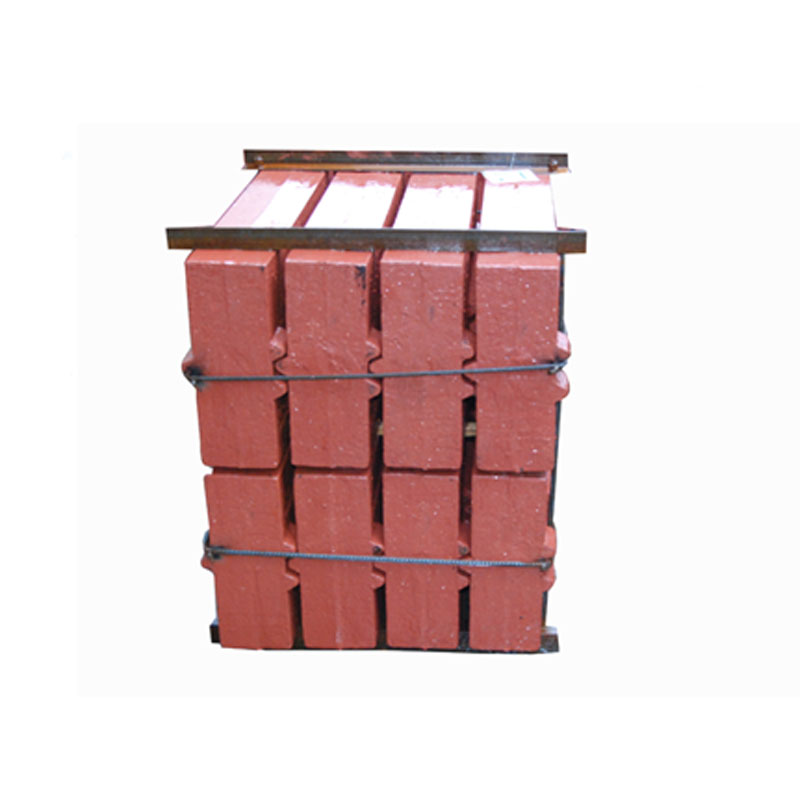
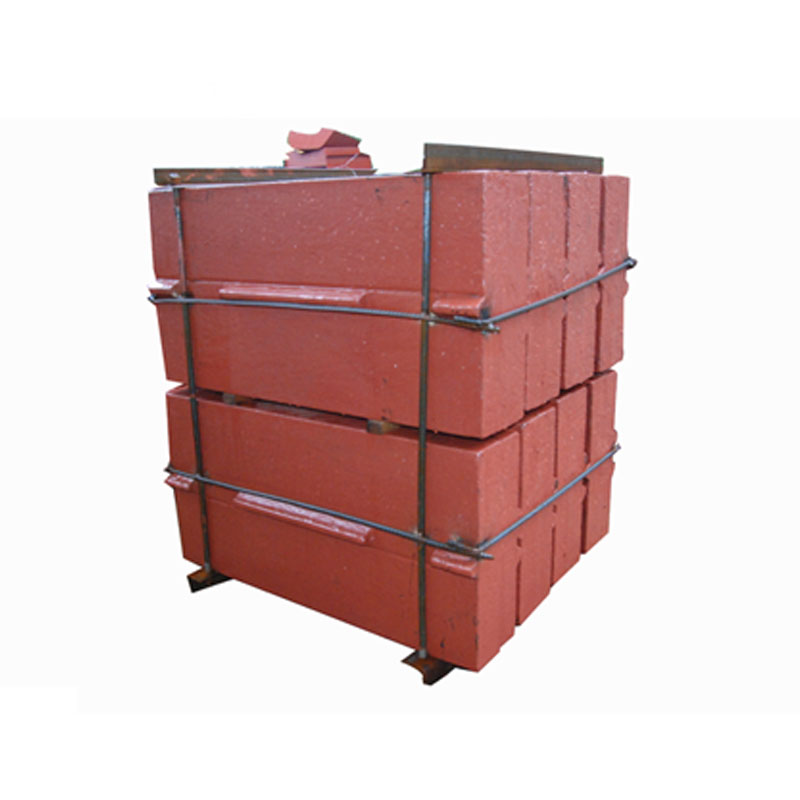
Blow Bar
Our Services
1.Before sales, we will fully understand the customer's working conditions and recommend the most appropriate material selection to the customer.
2.Provide customers with drawings based on their machine models, spare parts dimensions, etc.
3.After sales, we will continue to pay attention to the usage of the product and provide timely help.
4.Ensure that the quality of the purchased components is impeccable, and the technical parameters absolutely meet national standards.
5.Provide free quotation, worldwide sales, short delivery cycle, low price.
The blow bars of an impact crusher are among the most critical wear parts of the equipment and represent the highest-consumption components in daily production. Mounted directly on the high-speed rotating rotor, they are the key elements that actively strike the material. Their material, structure, and installation method directly determine the crusher's production efficiency, product shape, and operating costs.
Below is a detailed breakdown across four dimensions: core functions, common material choices, structural design, and maintenance/replacement.
1. Core Functions
Active Crushing and Shaping: As the blow bars rotate at high speed with the rotor, they deliver intense impacts and throw the incoming material against the impact plates. This "stone-on-iron" crushing method not only achieves highly efficient crushing but also produces cubic-shaped end products with no internal tension or cracks, ensuring excellent particle shape.
Determining Production Efficiency: The wear resistance and striking force of the blow bars directly affect the hourly output of the equipment. When the blow bars wear to a certain extent, the crushing efficiency drops. They must be adjusted or replaced promptly to avoid affecting capacity and to prevent damage to fasteners and other components.
2. Common Material Selection
Choosing the right material for blow bars requires a comprehensive consideration of the material's hardness, abrasiveness, and the equipment's operating conditions. The main materials currently available on the market include:
High Manganese Steel:
Characteristics: Offers excellent toughness. Under intense impact, its surface undergoes work hardening, thereby improving wear resistance.
Application Scenarios: Suitable for crushing materials with higher hardness but general abrasiveness, such as granite and basalt. However, it is not suitable for highly abrasive materials, as it cannot generate sufficient work hardening.
High Chrome Cast Iron:
Characteristics: Features extremely high hardness (cross-sectional hardness can exceed 58 HRC) and outstanding wear resistance, but relatively poor toughness, making it prone to fracture under intense impact.
Application Scenarios: Ideal for crushing hard and highly abrasive materials, such as quartz sand and limestone. It is not recommended for conditions containing uncrushable objects like iron blocks.
Bi-metal Composite:
Characteristics: Combines the high wear resistance of high chrome cast iron with the impact resistance of high-toughness materials (such as high manganese steel). The working parts use high chrome cast iron with a 100% metallurgical bond, effectively resolving the conflict between hardness and toughness.
Application Scenarios: Adaptable to various complex and harsh operating conditions, it is currently the mainstream choice offering high cost-effectiveness.
Alloy Steel & Medium Carbon Alloy Steel:
Characteristics: Offers high strength, high hardness, and excellent wear resistance at a relatively lower cost.
Application Scenarios: Suitable for crushing medium-hardness materials (such as coal and limestone) or hard mining rocks.
Ceramic Composite:
Characteristics: Ceramic particles are embedded in a metal matrix, significantly enhancing wear resistance.
Application Scenarios: Applicable for crushing special ores or construction waste where extremely high wear resistance is required.
3. Structural and Installation Design
Fixing Methods: Blow bars are typically secured in the rotor grooves via bolts, clamping plates, or wedges. Wedge fixing utilizes centrifugal force—the higher the rotor speed, the tighter the fixation. Clamping plate fixing effectively prevents the axial movement of the blow bars.
Symmetrical Balanced Installation: When replacing blow bars, they must be grouped by weight and installed symmetrically on both sides of the rotor with similar weights. Uneven single-sided wear or excessive weight discrepancies will cause severe machine vibration and seriously damage the main bearings.
4. Maintenance and Replacement Tips
Replacement Criteria: Blow bars must be adjusted or replaced promptly when wear exceeds one-third (or reaches the limit mark).
Safety Standards: Before replacement, the machine must be shut down, powered off, and the power switch locked out. Open the hydraulic inspection chamber and insert safety pins to secure the rotor, preventing accidental rotation and injuries.
Disassembly and Installation: During disassembly, gently tap the blow bar with a hand hammer and push it out axially through the inspection door. After installing new blow bars, manually rotate the rotor 2-3 turns to ensure there is no jamming or collision noise. Then, conduct a no-load test run; feeding should only begin after confirming that vibration and bearing temperatures are normal.
Relevant parts
Service Process
The company's sales network covers all major cities across China, while our R&D and manufacturing products have reached numerous countries and regions in Southeast Asia, the Middle East, Africa, Europe, and beyond, earning widespread acclaim from customers worldwide.
FAQs
We have 30+ years of industry experience, a professional team of engineers, strong production strength and mature equipment.
The company has a complete accessory system to provide you with reliable and fast accessory services, complete models, high-quality and durable accessories.
Engineers personally go to the site for technical training in installation, operation and maintenance to help you solve installation and operation problems.
We provide lifelong service for the equipment we sell, including post-maintenance services.
We have professional technical experts and service teams to tailor solutions for each customer.
The mainframe is designed for continuous heavy-duty operation. Wear parts such as jaw plates, liners and blow bars are made of high-manganese steel or alloy materials, and their service life depends on the material hardness and working hours.
Every machine goes through material inspection, machining inspection, assembly and a full no-load test run before shipment. Inspection records and test videos are provided to customers.
Warmly welcome. You can visit our manufacturing base in person, and remote video inspection is also available for customers from overseas.
Yes. Package orders of a full line or multiple machines usually receive a more favorable price and priority in the production schedule.
Large mainframes are shipped by sea in containers or bulk vessels; smaller machines and spare parts go by container, air freight or international express, with full packaging for moisture and rust protection.