

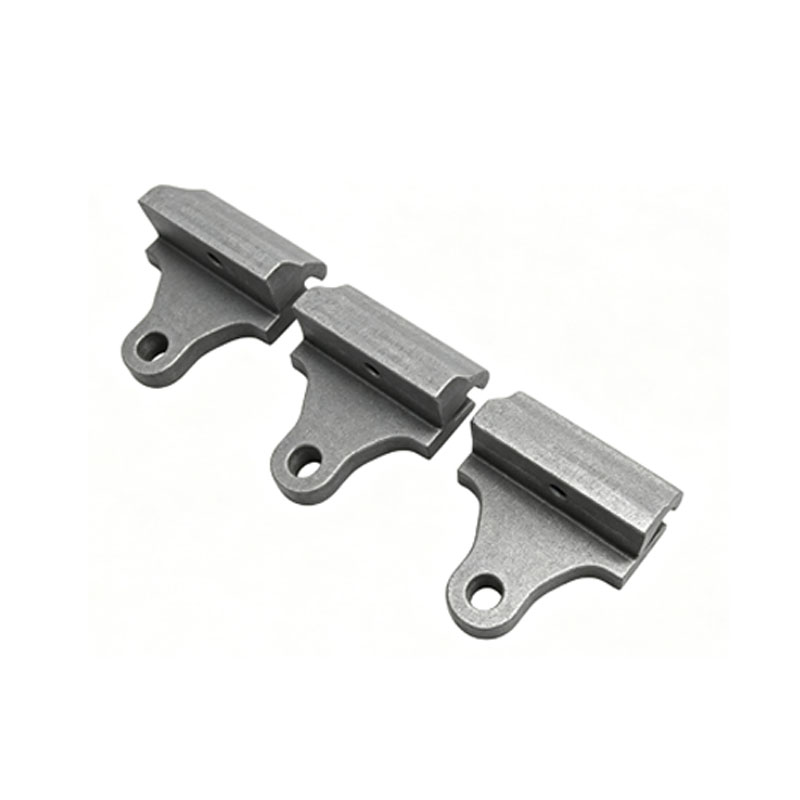
Main Wear Block
Our Services
1.Before sales, we will fully understand the customer's working conditions and recommend the most appropriate material selection to the customer.
2.Provide customers with drawings based on their machine models, spare parts dimensions, etc.
3.After sales, we will continue to pay attention to the usage of the product and provide timely help.
4.Ensure that the quality of the purchased components is impeccable, and the technical parameters absolutely meet national standards.
5.Provide free quotation, worldwide sales, short delivery cycle, low price.
In Vertical Shaft Impact (VSI) crushers, the main wear block (more commonly referred to in the industry as the Rotor Tip, Blow Bar, or Impact Block) is the core working component installed at the outlet of the rotor channels. It directly determines the crusher's production efficiency, sand output rate, and operating costs.
1. Core Functions and Working Principle
Flow Distribution and High-Speed Ejection: After the material enters the rotor from the feed inlet, the main wear block utilizes the massive centrifugal force generated by the high-speed rotation of the rotor to accelerate the material and eject it into the crushing chamber at high speeds, providing the core kinetic energy for the crushing process.
Direct Impact Crushing: As the component in direct contact with the material, it delivers intense strikes and impacts, which is the key to achieving the "rock-on-iron" or "rock-on-rock" crushing process.
Determining Sand Output Rate: The wear condition of the rotor tip directly affects the ejection trajectory, velocity, and overall efficiency of the material. Severe wear can lead to a decreased sand output rate, an increase in return material, and higher equipment power consumption.
2. Materials and Manufacturing Processes
Since the main wear block is subjected to continuous, intense impacts and friction from the material during high-speed operation, it must possess extremely high impact toughness and wear resistance.
Common Materials: They are mainly cast from high-chromium cast iron, high-chromium cast steel, high-chromium alloy steel, or high manganese steel. Some high-end products also employ inlaid composite casting technology to maximize wear resistance while ensuring impact toughness.
Manufacturing Processes: They are typically produced using V-process, lost foam, or sodium silicate sand casting processes.
3. Structural Design and Maintenance Advantages
Modular Design: Modern VSI main wear blocks mostly feature a modular design. When local wear occurs, only the worn tip/wear block section needs to be replaced without having to replace the entire rotor assembly, significantly reducing operating costs.
Anti-Damage Design: Optimized designs, such as diamond-shaped impact blocks, can effectively prevent the material from damaging the internal vertical plates of the equipment after the wear block is worn down, providing protective benefits.
Relevant parts
Service Process
The company's sales network covers all major cities across China, while our R&D and manufacturing products have reached numerous countries and regions in Southeast Asia, the Middle East, Africa, Europe, and beyond, earning widespread acclaim from customers worldwide.
FAQs
We have 30+ years of industry experience, a professional team of engineers, strong production strength and mature equipment.
The company has a complete accessory system to provide you with reliable and fast accessory services, complete models, high-quality and durable accessories.
Engineers personally go to the site for technical training in installation, operation and maintenance to help you solve installation and operation problems.
We provide lifelong service for the equipment we sell, including post-maintenance services.
We have professional technical experts and service teams to tailor solutions for each customer.
The mainframe is designed for continuous heavy-duty operation. Wear parts such as jaw plates, liners and blow bars are made of high-manganese steel or alloy materials, and their service life depends on the material hardness and working hours.
Every machine goes through material inspection, machining inspection, assembly and a full no-load test run before shipment. Inspection records and test videos are provided to customers.
Warmly welcome. You can visit our manufacturing base in person, and remote video inspection is also available for customers from overseas.
Yes. Package orders of a full line or multiple machines usually receive a more favorable price and priority in the production schedule.
Large mainframes are shipped by sea in containers or bulk vessels; smaller machines and spare parts go by container, air freight or international express, with full packaging for moisture and rust protection.