

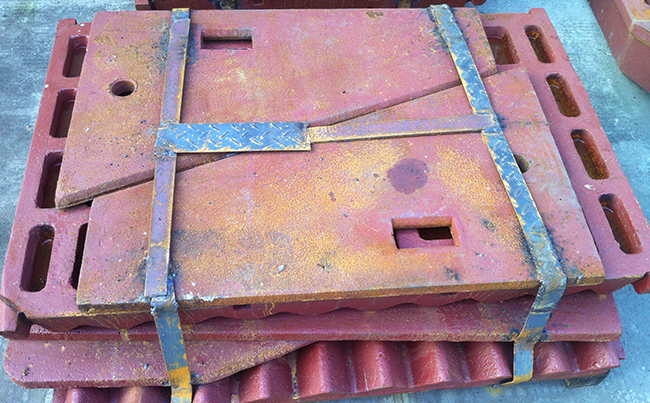
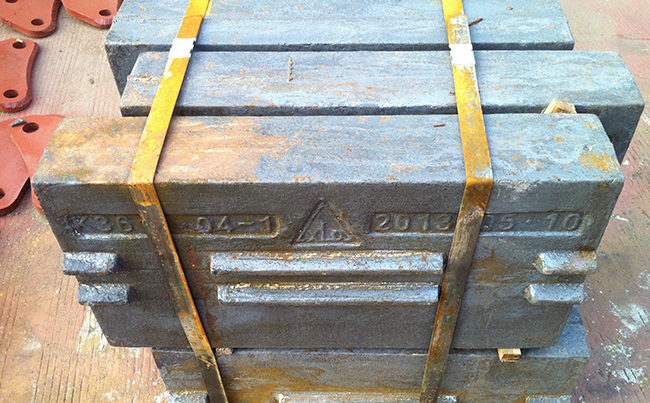
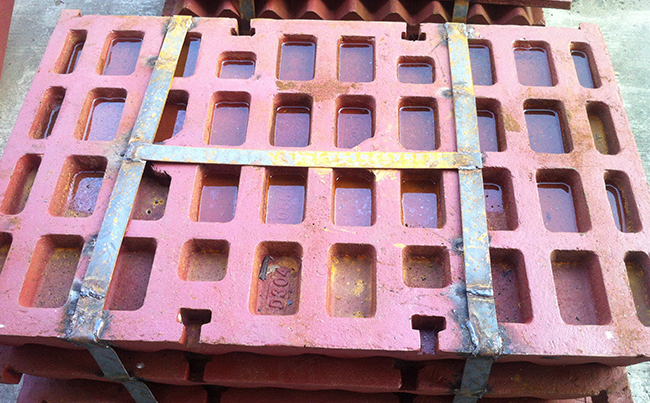
For aggregate producers supplying highway, railway, hydraulic and municipal infrastructure projects, finished product quality and production consistency are directly tied to the performance of primary crushing equipment. Among all jaw crusher parts, jaw crusher plates (also known as jaw dies) are the core wear components that come into direct contact with feed material during every crushing cycle. The material grade, tooth profile and cavity design of jaw plates determine not only wear service life, but also crushing efficiency, energy consumption and the particle shape of the crushed product. Many aggregate operators select jaw plates based solely on purchase price, without matching material properties to rock hardness or considering cavity profile effects on product quality. The result is frequent replacement, high operating cost, excessive flaky particles and product rejection by contractors. For suppliers targeting high-specification infrastructure projects, optimizing jaw plate selection and maintenance is one of the most effective ways to improve product quality, reduce tonnage cost and strengthen competitive advantage.

Common Pain Points of Mismatched Jaw Crusher Plates
The most prevalent problem is abnormally short service life and uneven wear. When plate material is too soft for the feed rock hardness, abrasion wear proceeds extremely fast. In granite and basalt applications, low-grade manganese steel jaw plates may wear out in just 200 to 400 operating hours, requiring bi-weekly replacement. Uneven wear is also very common: the lower section of the fixed jaw plate often wears much faster than the upper section due to material accumulation and compression at the discharge zone, leaving large amounts of usable material on the upper portion and reducing overall plate utilization. Operators can typically identify end-of-life plates by three signs: discharge size increases noticeably, throughput drops, and the closed side setting cannot be adjusted back to specification.
Second, poor finished aggregate shape and high flakiness index. Worn jaw plates lose their original tooth profile and crushing angle, resulting in insufficient inter-particle crushing and excessive splitting action. This produces high proportions of flat and elongated particles. For highway surface course and hydraulic concrete applications where strict cubical shape requirements apply, high flakiness index leads to product rejection, rework costs and damaged customer relationships. Many operators upgrade screening and secondary crushing equipment to compensate, without realizing that primary jaw plate condition is the root cause.
Third, reduced throughput and increased specific energy consumption. As jaw plates wear, the crushing chamber geometry changes, widening the discharge gap and reducing the effective crushing stroke. Throughput gradually decreases while power consumption per ton increases. Over the service life of a set of worn plates, productivity can drop by 10% to 20% compared with new plates. Operators often compensate by running the crusher at higher feed rates, which further accelerates wear and increases overload risk.
Fourth, sudden fracture and safety risks. Plates manufactured with poor casting quality, internal defects or improper heat treatment can develop cracks and fracture under impact load. Broken plate fragments can damage the crusher frame, fall through the discharge opening and create safety hazards for downstream equipment and on-site personnel. Sudden plate failure also causes unplanned emergency shutdowns that disrupt production schedules.
Material Matching for Different Rock Types
There is no single best jaw plate material for all applications. Selection must balance abrasion resistance, impact toughness and cost based on feed rock properties.
For soft to medium-hard rock such as limestone, dolomite and weathered stone, standard Mn13 high manganese steel jaw plates provide excellent cost-performance. Under normal impact conditions, manganese steel undergoes work-hardening, increasing surface hardness from approximately 220 HB to over 550 HB while retaining a tough interior that resists cracking. This is the most widely used and economical choice for standard limestone aggregate plants and construction waste recycling operations. Plates should conform to ASTM A128 standards with proper solution heat treatment to ensure full austenitic microstructure and reliable work-hardening behavior.
For hard rock applications including granite, basalt, quartzite and iron ore, Mn18Cr2 high manganese chromium steel jaw plates are the preferred solution. The addition of chromium and other alloying elements refines the material microstructure, significantly improving hardness and abrasion resistance while maintaining good impact toughness. Compared with standard Mn13, Mn18Cr2 plates typically deliver 30% to 50% longer service life in hard rock conditions, making them the standard choice for most quarry operations processing abrasive stone. For even more demanding conditions, Mn22 grades offer further improved wear performance under heavy impact loading.
For extremely abrasive hard rock and high-tonnage continuous mining operations, bimetallic composite jaw plates with high-chromium iron or titanium carbide (TiC) working surfaces offer the highest wear performance. These plates combine a tough manganese steel base layer with a high-hardness wear layer, providing both fracture resistance and exceptional abrasion resistance. TiC composite plates can reach approximately 3200 HV localized hardness, far exceeding what work-hardening alone can achieve. Service life can be 60% to 100% longer than standard alloy manganese plates. However, they require effective tramp metal removal to prevent impact delamination, and carry a higher upfront cost.
Cavity Profile Optimization for Productivity & Quality
Tooth profile and crushing cavity configuration have major effects on throughput, product shape and wear pattern — often more so than material grade alone.
Standard deep cavity jaw plates feature larger crushing stroke and higher reduction ratio, making them suitable for primary crushing of large run-of-mine rock. They deliver higher throughput for a given crusher size and are ideal for the first stage of multi-stage crushing flowsheets. However, deep cavity designs produce slightly higher flakiness index compared with optimized profiles.
Optimized fine crushing cavity profiles feature modified tooth shape and reduced nip angle to improve inter-particle crushing action. They produce more cubical product with lower flakiness index, which is highly beneficial for infrastructure projects with strict aggregate shape requirements. These profiles are ideal for jaw crushers used in the secondary stage, or for single-stage crushing applications where finished product shape is a priority.
Curved jaw plate designs provide more uniform crushing action throughout the chamber, reducing uneven wear and extending plate service life. They also produce more consistent product gradation and lower fines generation compared with traditional straight-plate designs. Modern optimized chambers divide the crushing face into progressive reduction zones for more efficient material flow and more uniform plate loading. When selecting a jaw plate for crusher upgrade, consult with suppliers to match cavity profile to your specific throughput and product quality targets.
Installation & Maintenance Practices to Extend Service Life
Proper installation and routine maintenance can significantly extend jaw plate life and improve crushing performance.
Ensure full, uniform contact between jaw plates and the jaw body surface. Before installation, clean all contact surfaces thoroughly and remove any burrs, debris or residual material. Poor contact causes uneven stress distribution, leading to plate breakage and accelerated wear. Use appropriate backing material or filler compound if needed to ensure full surface contact. Modern wedge-type dry assembly systems eliminate poured backing material and reduce field replacement time substantially.
Fasten plate bolts evenly in diagonal sequence with correct torque values. Loose bolts are the leading cause of plate shifting, cracking and abnormal noise. Re-torque bolts after the first few hours of operation following installation, and recheck regularly during maintenance. Use high-strength bolts and proper locking devices designed for heavy vibration environments.
Implement a structured plate rotation program. Most jaw plates are symmetrical and can be flipped end-for-end once the lower wear zone reaches approximately 50% wear. This shifts the load to the less-worn upper half, allowing full utilization of the entire plate surface and effectively extending total service life by 30% to 40%. Establish clear wear thresholds for rotation based on measured thickness data rather than visual estimation.
Optimize feed conditions to reduce wear. Install grizzly feeders and pre-screening units to remove fine material and soil before it enters the crushing chamber. Fine abrasive particles accelerate three-body abrasion wear on plate surfaces. Use magnetic separators to remove tramp metal, which can cause catastrophic plate fracture and equipment damage.
ROI of Premium Jaw Plates for Infrastructure Aggregates
Upgrading to properly specified premium jaw plates delivers strong return on investment for aggregate producers serving infrastructure markets.
Consider a 250 tph hard rock aggregate plant supplying highway construction. Standard Mn13 jaw plates last 300 operating hours and require 12 replacement sets per year. Upgrading to Mn18Cr2 plates extends service life to 500 hours, reducing annual replacements to 7 sets. Even with a 40% higher unit price, total annual jaw plate expenditure is lower, and fewer changeouts save maintenance labor and downtime. For operations with very high downtime costs, upgrading to TiC composite plates often achieves payback within a single replacement cycle.
Beyond direct wear cost savings, improved product shape creates tangible revenue benefits. Aggregate meeting premium shape specifications typically commands a 5% to 15% price premium in the market, and qualifies producers for higher-value infrastructure project contracts. Stable throughput and consistent gradation also improve the efficiency of downstream crushing and screening processes, raising overall plant output.
Conclusion
Jaw crusher plates are the most critical wear component determining primary crushing performance, product quality and operating cost. For aggregate producers supplying high-specification infrastructure projects, selecting the right plate material and cavity profile for feed rock characteristics, combined with proper installation and proactive maintenance, directly improves product shape, extends service life and reduces tonnage processing cost. Rather than treating jaw plates as a low-value commodity, operators who optimize plate selection as part of their overall production strategy gain a clear competitive advantage in quality, cost and reliability.
Related Tags
Jaw Crusher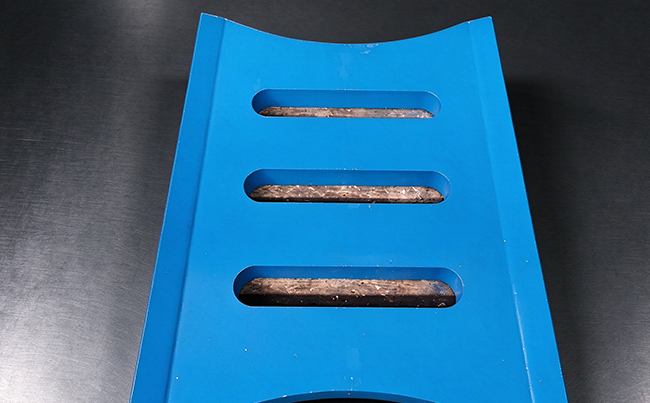
Latest Updates
Follow Us
Keeping crushing and screening equipment running worldwide.
Sign Up To Newsletter
Subscribe to get the latest parts news.
Post Comment