

Vietnam’s cross-provincial coordination of construction materials has brought new supply pressure to local quarries. Many quarry owners and production managers receive updated supply tasks and immediately consider purchasing new crushing or screening equipment to lift output. However, rushing to expand investment often leads to unnecessary capital waste, because the rated capacity marked on equipment nameplates does not equal stable, deliverable aggregate output. Before submitting any budget for new machines, the first step is to run a full process audit across four core links: feeding, crushing, screening and conveying. The fixed screening machine is a central control node in this circuit, and its actual working condition usually decides whether the whole plant can release latent capacity. This article outlines a practical inspection framework for quarry teams to evaluate existing production limits, identify real bottlenecks, and decide whether adjustment or new investment is needed.

Check the feeding system for stable and qualified feed flow
A large number of capacity shortages in aggregate lines do not start from crushers or screens, but from unstable feeding. Many quarry sites rely on wheel loaders to dump raw rock into hoppers, and manual feeding creates big fluctuations in feed volume, lump size and moisture content. When feed surges suddenly, downstream equipment will be overloaded; when feed is intermittent, the whole circuit runs light and cannot reach continuous tonnage.
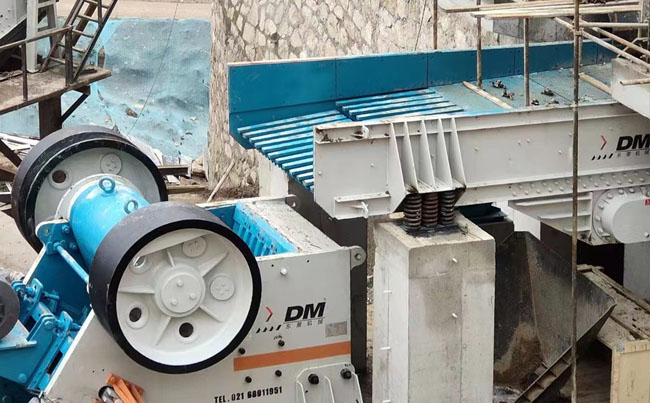
The first inspection item is the feeding hopper and vibrating feeder. Operators need to record feed continuity for at least two full shifts, including maximum lump size, moisture rate and mix of fine material. If the raw rock contains high clay or moisture, material will stick to the hopper wall and cause periodic blockage. Even if the fixed screening machine and crushers are sized for high tonnage, frequent feeding interruptions will drag down average hourly output.
Teams should also check the feed distribution. Uneven feed will send oversized rock into one side of the crushing cavity while fine material bypasses the crushing zone. This condition accelerates uneven wear on crusher liners and changes the gradation of material entering the fixed screening machine. The goal of feeding audit is not only to confirm whether the feeder can reach target tonnage, but also to judge whether it can deliver consistent material that matches the designed parameters of the downstream crushing and screening circuit.
Audit crushing stages for stable reduction and gradation output
After confirming feeding stability, the next inspection point is the crushing circuit. Most quarry managers focus on crusher rated throughput, but the real indicator is whether the crusher can produce a consistent intermediate gradation suitable for the fixed screening machine. Primary crushing, usually by jaw crusher, reduces big rock into manageable fragments; secondary crushing, often cone or impact crusher, shapes particles and controls the percentage of fines.
Operators need to collect samples from the discharge of each crushing stage and run sieve analysis. If the crusher setting is too wide, oversize material will increase and create heavy recirculation load back to the crusher. If the setting is too tight, power consumption rises sharply and wear parts wear out quickly. Both situations reduce the overall available capacity of the plant.
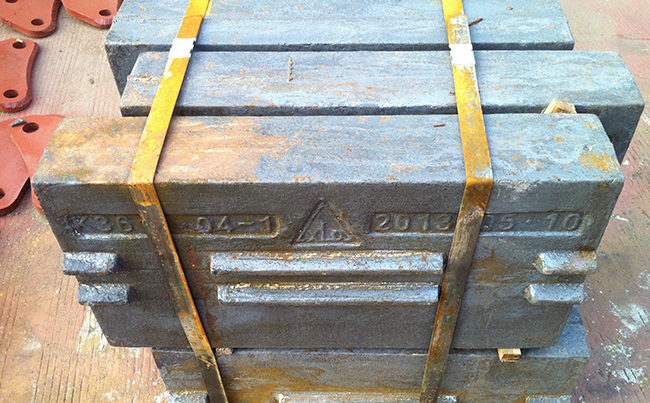
Wear part status is another key inspection point. Worn jaw plates, cone liners or impact blow bars change the crushing cavity geometry. The reduction ratio drifts, particle shape becomes poor, and the material sent to the fixed screening machine carries unexpected coarse or fine fractions. Many Vietnamese quarries miss this point: they assume the crusher still runs at original capacity, while worn components have already lowered stable output. The audit should record current liner thickness, operating current, closed-side setting and recirculation percentage for each crushing stage.
Evaluate fixed screening machine efficiency and deck performance
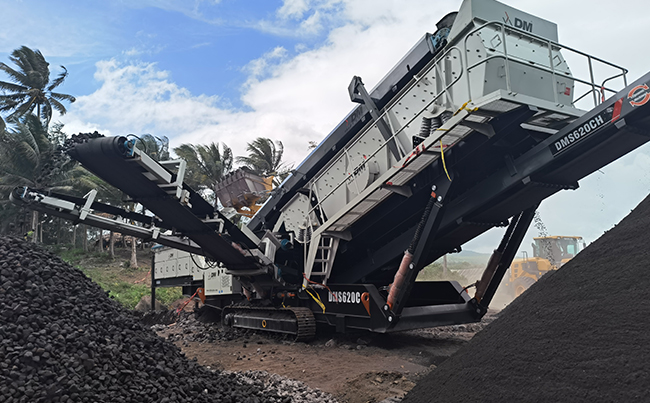
The fixed screening machine separates material into finished aggregate and recirculating feed, which makes it the bottleneck in most closed crushing circuits. Many operators only check whether the screen is running, without measuring actual screening efficiency. A screen with high feed volume but low efficiency cannot produce qualified finished aggregate, even if the tonnage passing through the deck looks high.
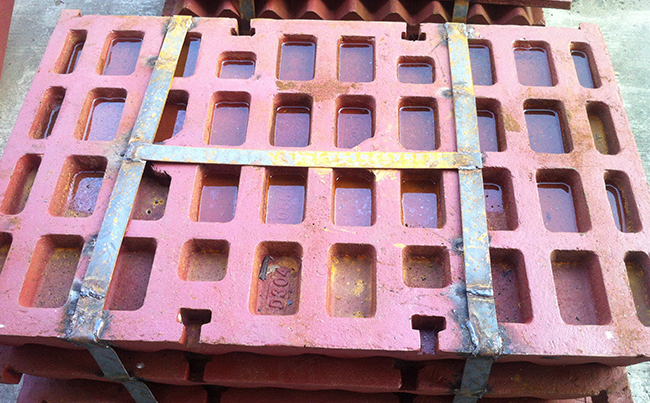
Inspection starts with screen media. Screen panels can be blocked by wet clay, blinded by fine dust, or stretched and worn after long operation. A worn screen panel creates larger effective openings, allowing oversize material to mix into finished stockpiles and cause product rejection. If the opening size is smaller than designed, qualified fine aggregate will be sent back to the crusher and increase unnecessary recirculation load. Operators should check every deck, clean blocked mesh and replace worn panels during the audit.
Next, check stroke, vibration frequency and material distribution across the screen width. Material piling in one area means uneven spreading, which wastes available screen area and cuts separation accuracy. The feed chute above the fixed screening machine should spread material evenly across the full deck width. Material moisture is also critical in Vietnam’s tropical climate. Rainy season moisture raises blinding risk significantly, so the inspection must include moisture tracking and anti-blinding measures.
The audit should calculate screening efficiency for each required aggregate fraction. If efficiency stays below the target range, the fixed screening machine becomes the limiting factor, even if the feeder and crushers have enough theoretical capacity. In this case, adjusting screen media, stroke or feed distribution can unlock extra output without buying new equipment.
Inspect conveying, transfer points and stockpile outflow capacity
The fourth link is the conveyor system, which connects feeding, crushing, fixed screening machine and finished stockpiles. Many capacity audits ignore conveyors, but narrow belts, slow speed, blocked transfer chutes and spillage can cap the whole plant output. A conveyor sized for lower tonnage cannot carry the upgraded material flow even if upstream screening and crushing are optimized.
Inspect every transfer chute between machines. Rock impact wears chute liners, and deformed chutes cause material blockage, spillage or belt misalignment. Spilled material requires extra labor to clean and creates safety risks. Belt tension, alignment and roller condition also need to be checked. Slipping or misaligned belts reduce stable conveying speed and trigger frequent stops.
Finished product conveyors leading to stockpiles also matter. If the stockpile zone is limited, or loading trucks cannot take away aggregate fast enough, finished material piles up and forces upstream machines to slow down. This is a logistics bottleneck rather than a processing bottleneck. For Vietnam’s cross-provincial material allocation, outbound transport scheduling directly affects continuous production. The audit should include loading rhythm, truck turnaround time and stockpile buffer capacity.
Build a decision workflow after the four-link inspection
After finishing the four-part audit, quarry teams can classify the bottleneck type and make rational decisions. If the problem is unstable feeding, hopper modification, feeder adjustment or stockpile pre-blending can stabilize raw material. If the crushing circuit has drifting gradation, resetting crusher gaps and scheduling wear part replacement can restore stable intermediate product. If the fixed screening machine is the constraint, screen media upgrade, stroke adjustment or deck reconfiguration often improves screening efficiency. If conveyors and transfer points are too small, chute modification or belt upgrade removes flow limits.
Only when the audit confirms that all four links are already operating near their stable limits, and no process adjustment can meet the new supply target, should the quarry consider adding new equipment. Blind investment before bottleneck verification often creates a new mismatch: new machines are installed, while one old link still restricts the whole plant. This is a common mistake for quarries responding to sudden supply tasks under regional material coordination policies.
Conclusion
Vietnam’s cross-provincial aggregate supply coordination brings clear market demand for local quarries, but higher supply tasks do not automatically mean new equipment purchase. The reliable approach is to audit feeding, crushing, screening and conveying in sequence. The fixed screening machine acts as a critical control point that connects crushing performance and finished product quality. By measuring real operating parameters instead of only relying on nameplate rated tonnage, quarry operators and production managers can identify hidden bottlenecks, release latent capacity with low-cost adjustments, and confirm whether the existing line can safely deliver the required aggregate volume and quality. This structured inspection protects capital efficiency and helps quarries respond to government material allocation plans in a stable, predictable way.
Latest Updates
Follow Us
Keeping crushing and screening equipment running worldwide.
Sign Up To Newsletter
Subscribe to get the latest parts news.
Post Comment