

Malaysia’s ongoing railway upgrade projects, including KTMB track maintenance and new line expansion, release regular tender demands for railway ballast and engineered aggregate. Many quarry suppliers receive these invitations and immediately focus on one single metric: how many tons of rock the plant can process per hour. It is easy to assume that higher throughput equals better qualification and stronger delivery capacity. However, experienced material buyers and railway engineers know that railway aggregate supply follows far stricter rules than ordinary construction aggregate. Even if a quarry can achieve impressive hourly tonnage, inconsistent particle gradation, poor particle shape, or unstable screening output may lead to batch rejection, delayed inspection and failed tender evaluation. The tracked mobile screening machine sits at the core of this quality control loop, directly deciding whether crushed rock can turn into saleable ballast that complies with Malaysia railway standards. This article explains why output tonnage cannot be the primary target, and how suppliers can build reliable production workflows around gradation control and stable screening.

Understanding railway ballast specifications beyond simple tonnage
Railway ballast carries dynamic loads from moving trains, distributes pressure to the subgrade, drains rainwater and maintains track geometry. Unlike concrete aggregate or road base material, it has non-negotiable technical limits. Particle size distribution, flakiness index, abrasion resistance and fines content are all checked in every batch sample. KTMB procurement documents reference local railway standards that define acceptable sieve retention ranges, maximum percentage of flat and elongated particles, and limits on clay and dust contamination.
A quarry may feed large volumes of rock through crushers and record a high total throughput, but if the screening process cannot separate fractions accurately, the final stockpile will contain excess fines, oversized chunks or mixed intermediate sizes. This material might be acceptable for general fill works, yet it will not pass railway acceptance testing. The tracked mobile screening machine is responsible for sorting crushed rock into defined fractions, removing undersized fines and diverting oversize material back for re-crushing. When screening performance drifts, the whole production batch loses value, regardless of how many tons have been processed.
Many suppliers misunderstand the tender evaluation logic. Procurement teams do not award contracts purely based on the highest reported production capacity. They assess the supplier’s ability to deliver consistent, compliant material for months or years. A plant with moderate but stable screening output often wins longer framework agreements, while high-tonnage sites with fluctuating gradation face higher rejection risks.
How crushing circuit settings shape feed quality for tracked mobile screening machine
Screening efficiency does not exist independently. The material entering the tracked mobile screening machine is determined by upstream crushing stages, including jaw and impact or cone crushers. Railway ballast requires cubical particles, so impact crushing is commonly used for shaping after primary jaw crushing. If crusher gaps are adjusted loosely, oversize rock increases and creates heavy recirculation loads. If gaps are too tight, power consumption rises, wear parts wear rapidly, and excessive fine dust is generated.
Operators must test crushed intermediate products before sending them to the screening unit. Sieve analysis samples should be collected at regular intervals, not only during commissioning. Changes in raw rock hardness, moisture or feed lump size will shift the crusher output gradation. For example, wet granite from Malaysian tropical quarries produces more adherent fines, which tend to stick to screen decks and cause blinding. If the crushing team does not adjust settings according to rock conditions, the tracked mobile screening machine will receive an unpredictable feed mix and lose separation accuracy.
Particle shape is another hidden factor. Flat, elongated particles pass through screen openings more easily than cubical pieces, distorting sieve test results. Even if the sieve curve looks acceptable on paper, poor shape reduces interlocking performance once the ballast is laid on track. This is why railway inspectors check flakiness separately from gradation. The crushing circuit and screening process must work together to control both shape and size.
Key screening process controls for railway aggregate production
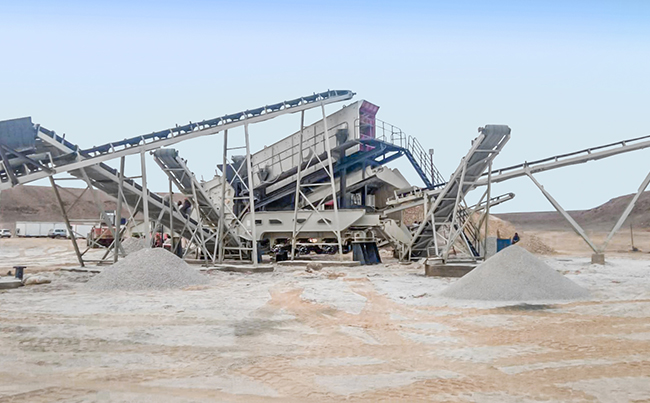
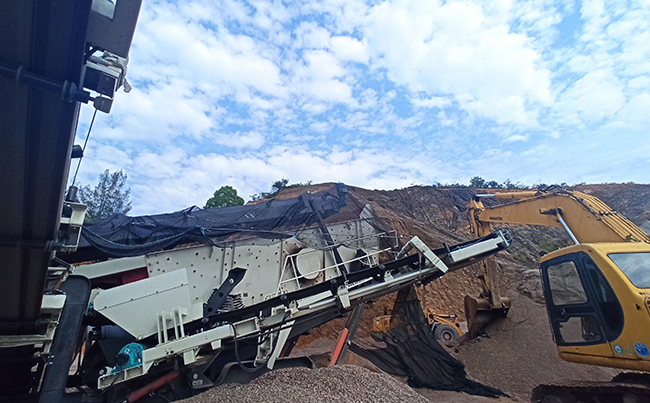
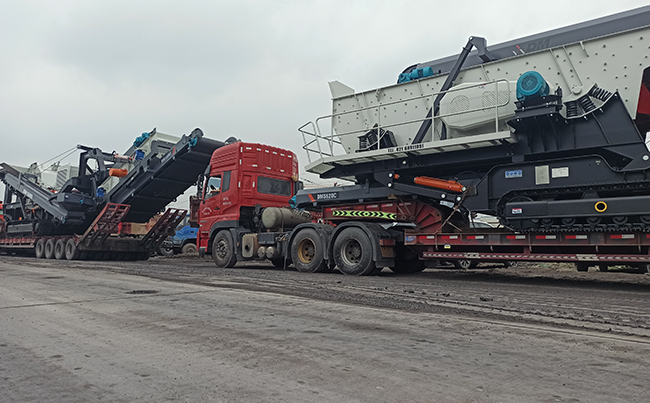
The tracked mobile screening machine used for ballast usually runs multiple deck configurations to separate coarse ballast, intermediate fractions and fines. Each deck has a specific aperture size matched to the standard gradation band. Several operational variables affect screening stability, and suppliers need to monitor them as standard routine.
First, screen media selection matters. Polyurethane panels resist abrasion and reduce blinding in wet conditions, while steel mesh offers higher open area for dry rock. Wrong media choice leads to frequent blockage or premature tearing. When panels wear unevenly, effective opening sizes change gradually, and the operator may not notice the drift until a sample fails inspection. Planned inspection cycles for screen decks are mandatory for railway supply contracts.
Second, feed distribution across the screen width directly impacts separation efficiency. Material piled on one side leaves part of the screen deck idle, reducing effective area and creating uneven fraction splitting. The feed chute above the tracked mobile screening machine should spread material evenly across the full width. Operators also need to control feed depth; a thick material bed traps fine particles and prevents them from passing through the mesh.
Third, vibration stroke and frequency must suit the target material. Heavier, coarse ballast fractions need larger stroke to lift and stratify particles, while fine fractions require tuned vibration to avoid blinding. Many sites run fixed vibration parameters all year, ignoring seasonal moisture changes. During Malaysia’s rainy season, higher surface moisture increases sticking risk, so stroke, feed rate and cleaning frequency all need adjustment.
Fourth, recirculation load must be measured. Oversize material returned to the crusher creates a closed circuit. If recirculation percentage rises continuously, it signals either crusher gap drift or declining screening efficiency. Suppliers should track recirculation tonnage alongside finished ballast output, rather than only counting final stockpile volume.
Stable delivery planning and logistics coordination for railway tenders
Even when crushing and screening produce compliant ballast, delivery failure can break the supply contract. KTMB projects often require scheduled delivery to track work zones, with tight windows for unloading and placement. Stockpile segregation is a common issue: finished ballast stacked in large piles separates by size as material rolls down the slope. The top and bottom sections of the same stockpile may show different gradation results, causing inconsistent batches to be loaded onto trucks.
Suppliers should design stockpile zones with low-height stacking or use blending methods to homogenize finished material. Sampling points must cover the full loading face, not just grab samples from the top surface. Loading rhythm and truck turnaround also link back to production scheduling. If the tracked mobile screening machine stops frequently for deck cleaning or maintenance, finished stock cannot build a stable buffer. Without sufficient buffer inventory, sudden breakdowns directly delay site delivery and trigger contractual penalties.
Material traceability is another tender requirement. Every delivery batch needs records of production date, sample test results, quarry source and equipment run data. Screening logs, crusher setting records and wear part replacement notes support traceability audits. This documentation burden is often overlooked by teams that only focus on pushing hourly tonnage.
Practical audit checklist for suppliers bidding railway aggregate projects
Before submitting a tender for KTMB ballast supply, quarry operators and production managers can run a simple audit to evaluate their production system. First, confirm the target gradation bands and physical limits specified in the tender standard. Second, collect continuous sieve samples over three full shifts to check whether the current crushing and screening circuit can hold the target curve consistently. Third, inspect the tracked mobile screening machine decks, feed distribution system and cleaning schedule to estimate downtime and maintenance frequency. Fourth, calculate recirculation load and check whether the crusher can produce cubical particles within acceptable flakiness limits. Fifth, assess stockpile management, blending procedures and truck loading capacity to confirm buffer capacity for continuous delivery.
If the audit shows frequent gradation drift, the priority is process adjustment, not adding larger crushers or raising feed speed. Many suppliers waste capital by upgrading equipment to chase higher tonnage, while the real bottleneck lies in unstable screening, poor sampling control or inadequate stockpile management.
Conclusion
Malaysia’s railway infrastructure programs create reliable opportunities for local quarry aggregate suppliers, but railway ballast procurement operates under strict quality and continuity rules. Raw hourly processing tonnage is a weak indicator of supply capability. What buyers and engineers value is consistent particle gradation, qualified particle shape, controlled fines and dependable delivery schedules. The tracked mobile screening machine acts as the critical control point that translates crushed rock into compliant railway ballast. By focusing on screening process stability, closed-circuit recirculation management, regular sampling and stockpile homogenization, suppliers can meet tender requirements without blindly expanding production capacity. This approach reduces batch rejection risk, supports long-term framework contracts and helps quarries build a trusted reputation for railway-grade aggregate supply.
Latest Updates
Follow Us
Keeping crushing and screening equipment running worldwide.
Sign Up To Newsletter
Subscribe to get the latest parts news.
Post Comment