

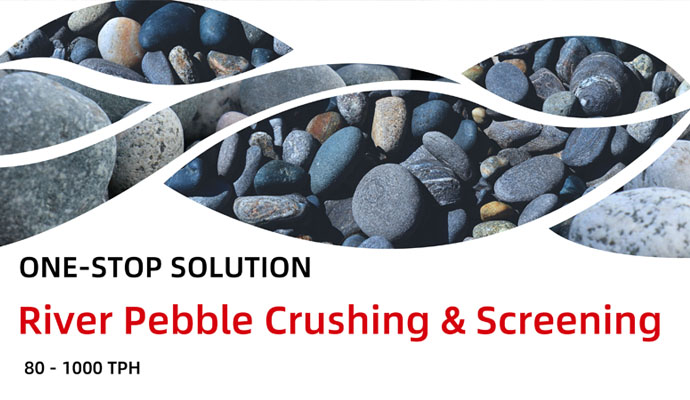
River pebbles look harmless — smooth, rounded, pleasing to the eye. For a crushing plant they are anything but: dense, hard, silica-rich, and their rounded shape means they roll instead of nipping. Pebble lines are among the most wear-intensive aggregate applications, and also among the most profitable when the sand-making stage is designed correctly.

Why Pebbles Punish Equipment
High hardness, high SiO₂. River pebbles are typically hard, quartz-rich rock — the combination that drives maximum abrasive wear, as covered in our wear mechanism guide.
Rounded feed slips. In the nip zone, rounded cobbles roll and slide rather than grip. Jaw profiles and chamber selection must account for this, or the primary crusher works at a fraction of its design throughput.
Sand-making stage dominates wear cost. In a pebble-to-sand line, the VSI stage consumes wear parts faster than all upstream stages combined.
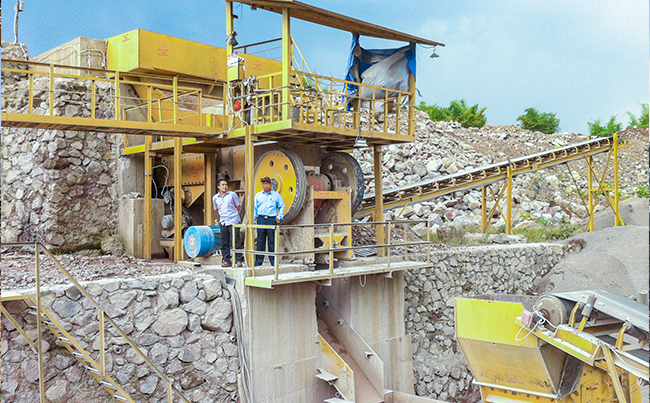
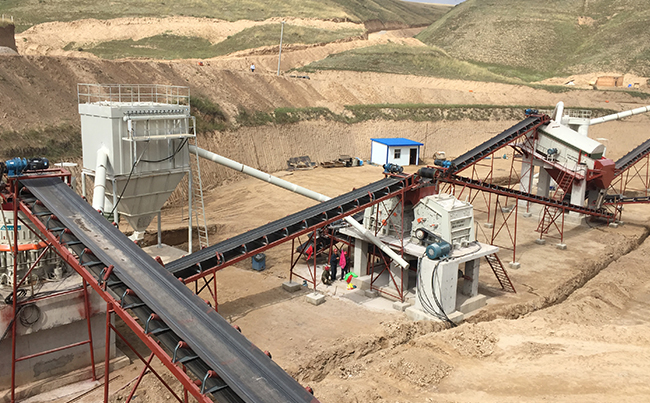
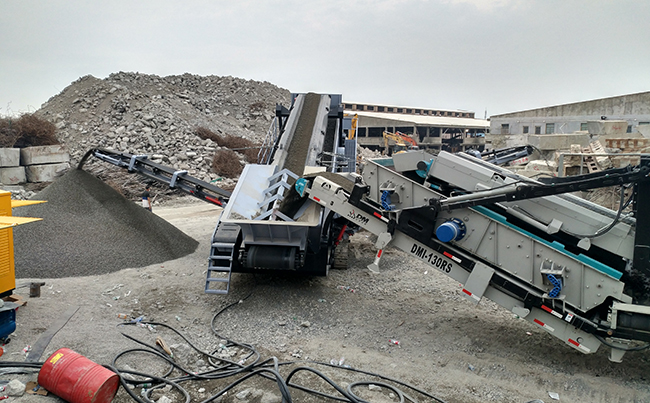
Recommended Crushing and Screening Flow
Pre-screening. A grizzly or vibrating screen removes fines and undersize before the primary crusher — on pebble feed, a significant share of material often needs no crushing at all.
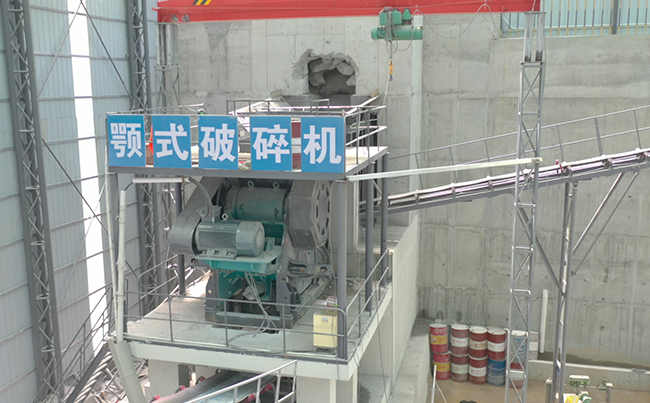
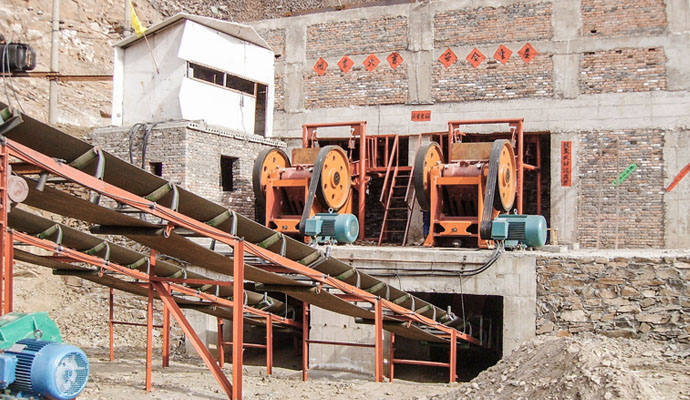
Primary — jaw crusher. Coarse-toothed plates grip rounded feed better; a hard-rock grade (Mn18Cr2 family) resists the abrasive surface — see jaw plates for hard rock.
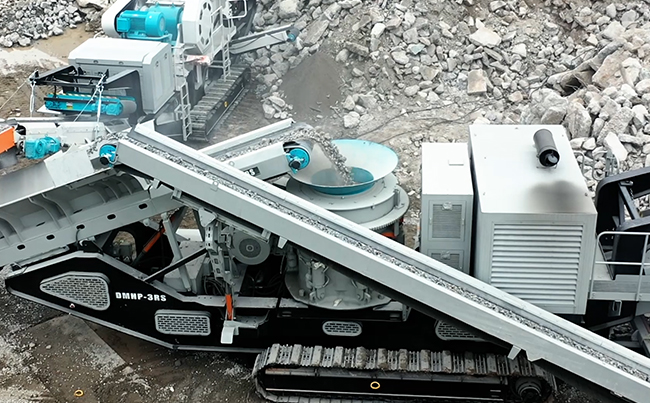
Secondary — cone crusher (medium chamber). Reduces pebbles to sand-feed size; choke feeding is essential since rounded feed is prone to slipping through starved chambers.
Tertiary + screening in closed circuit. Fine cone profile plus return screening to top-size control.
Sand making (VSI). The core value stage: pebbles' uniform hardness makes consistent manufactured sand possible. Rotor tips, anvils and cavity liners in the VSI are the fastest-wearing parts in the whole line — plan spares on a tonnes-per-set basis, not a calendar.
Final screening and sand classification.
Wear Parts Planning for Pebble Lines
Position | Part | Pebble-specific consideration |
Primary | Jaw plates | Hard-grade alloyed manganese; rounded feed concentrates wear at fixed zones |
Secondary/tertiary | Mantle & concave | Abrasion-dominated wear; matched profile sets |
VSI | Rotor tips, anvils, cavity liners | Highest wear rate in the plant; keep spare sets on site |
Screens | Screen meshes | High wear from hard, sharp manufactured sand |
Conveyors | Scrapers, impact beds | Sharp sand product is aggressive on belts |
Two Practical Tips from Operating Pebble Lines
Do not skip pre-screening. Because pebble feed contains many sized cobbles, removing material that needs no crushing protects the primary stage and increases line throughput at the same installed power.
Treat VSI wear parts as a production input, not a spare. Lines that keep one full rotor-tip set staged beside the machine change them in under an hour; lines that wait for delivery lose days of sand production.
Get a Configuration Proposal
Send us your pebble size distribution, sand specification (fineness modulus, stone powder content) and capacity target — we will propose the flow and quote wear parts for every stage. Contact us for a river pebble solution.
Latest Updates
Limestone Crushing and Screening Solutions
12-Nov-2026
Follow Us
Keeping crushing and screening equipment running worldwide.
Sign Up To Newsletter
Join 60,000+ subscribers and get the latest news on parts every week.
Post Comment