

Granite is one of the most demanding feed materials in the aggregate industry — and also one of the most valuable when crushed correctly. The same properties that make granite popular for concrete and asphalt aggregate (hardness, angular particles, durability) are exactly what punish poorly specified crushing plants.
This page outlines a proven granite crushing and screening flow, the equipment logic behind each stage, and the wear parts that dominate your operating cost.

Why Granite Is Hard on Equipment
High hardness. Granite's compressive strength is typically well above 100 MPa in published ranges, with a high quartz (SiO₂) content — the mineral that drives abrasive wear.
Abrasive wear dominates. As explained in our wear mechanism guide, high-silica rock grinds and ploughs into liner surfaces. Equipment selection must prioritise abrasion resistance over everything else.
Shape requirements. Aggregate specifications limit flaky and elongated particles; granite's natural fracture behaviour makes shape control an active design task, not an accident.
Recommended Crushing and Screening Flow
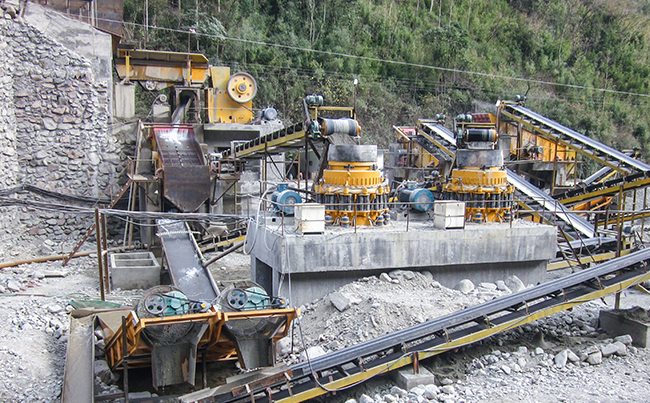
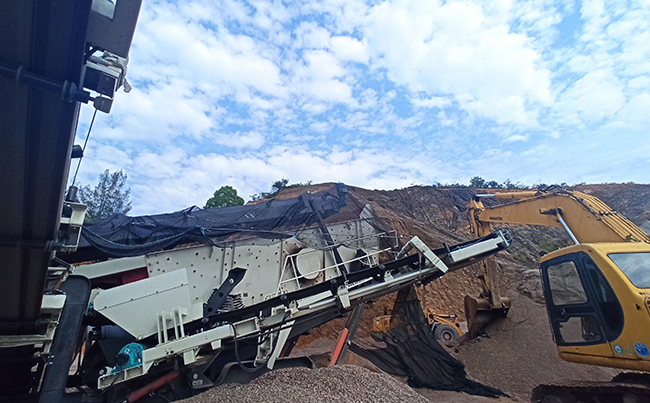
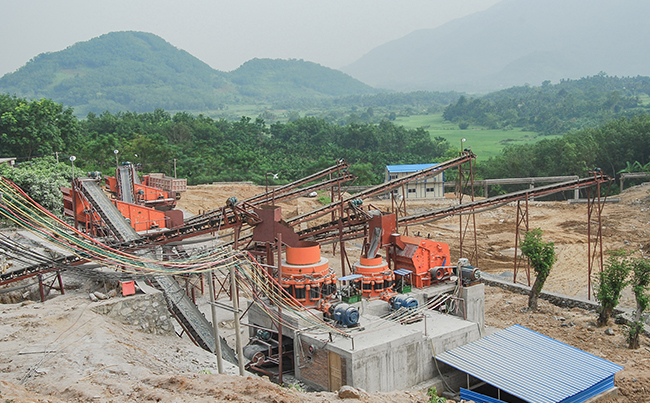
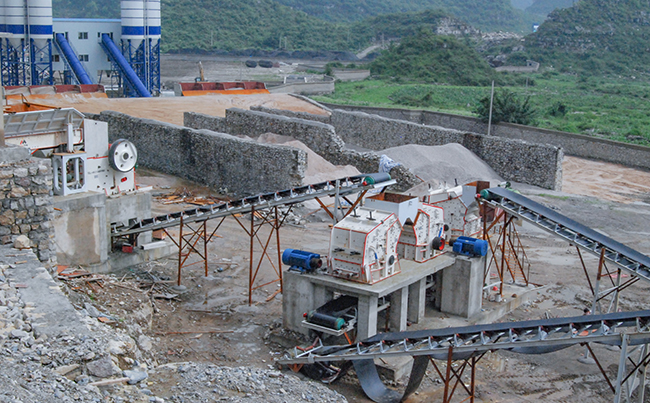
A typical granite line runs three crushing stages plus closed-circuit screening:
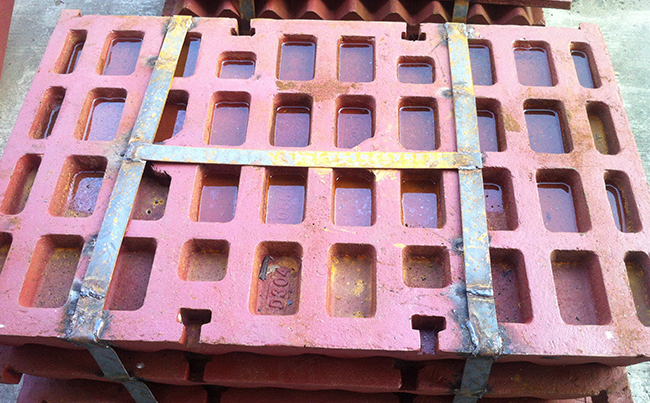
Primary — jaw crusher. Jaw plates for granite should be a chromium-alloyed high-manganese grade (e.g. Mn18Cr2 family) — see our jaw plates for granite crushing. Vibrating grizzly screen ahead of the crusher removes fines and reduces unnecessary wear.
Secondary — cone crusher (medium chamber). Cones are preferred over impact crushers at this stage for granite: the impact energy of hard, abrasive rock at scale drives up blow bar cost sharply.
Tertiary — cone crusher (fine chamber) in closed circuit. Return material is re-screened to hit top size; a fine profile with correct feed grading controls particle shape.
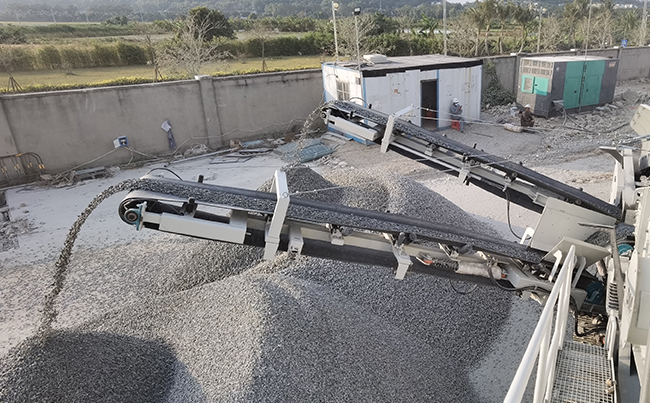
Screening. Multi-deck screens split final products (e.g. 0–5, 5–10, 10–20, 20–31.5 mm); oversize returns to the tertiary crusher.
Optional — sand making / shaping (VSI). Where manufactured sand or improved shape is required, a vertical shaft impact stage rounds off angular particles.
Wear Parts That Decide Granite Line Economics
Position | Part | Granite-specific consideration |
Primary | Jaw plates | Cr-alloyed manganese (Mn18Cr2 family); expect abrasive-dominated wear — smooth grinding, not cracking |
Secondary/tertiary | Mantle & concave | Matched profiles; watch for ring grooves from uneven feed |
| Tertiary | Concave fine profile | Faster wear than coarse stages; plan spares accordingly |
Screens | Screen meshes / panels | High-aperture wear from hard angular product |
Conveyors | Belt scrapers, impact beds | Sharp granite flakes cut belts and skirts |
Material selection detail is covered in our jaw plate material guide; the general rule for granite: if your plates grind smooth, abrasion dominates — step up alloy content, not hardness alone.
Common Configuration Mistakes
Using an impact crusher as the main hard-rock crusher. Workable with controlled feed and high-quality high-chrome bars, but cost per tonne usually loses to cone configuration on abrasive granite.
Starved feeding. Starved cones produce one-sided liner wear and poor shape; choke feeding is not optional on granite.
Underestimating screen wear. Hard angular aggregate eats screen panels; wear planning should include them, not only crusher liners.
Get a Configuration Proposal
Send us your target output size distribution, capacity and feed top size — we will propose a flow with matched equipment and wear-part grades. Contact us for a granite solution.
Latest Updates
Limestone Crushing and Screening Solutions
27-Sep-2026
Follow Us
Keeping crushing and screening equipment running worldwide.
Sign Up To Newsletter
Join 60,000+ subscribers and get the latest news on parts every week.
Post Comment