

Highway construction has strict technical standards for road base and subbase aggregates. Cubical particle shape is one of the core inspection indicators. Aggregates with high flaky and elongated content have poor interlocking performance. When used in road base layers, they are easy to crush under vehicle load, which causes pavement settlement, cracking and early damage. Many permanent aggregate plants serving highway projects adopt jaw crusher for primary crushing and cone crusher for secondary compression crushing. Cone crushing produces stable output capacity, yet the laminating crushing principle tends to generate more flaky particles. Finished aggregates often fail highway acceptance standards. Plant operators have to increase repeated crushing cycles, which raises power consumption and reduces hourly throughput. Some plants try to adjust cone crusher gap repeatedly, but the improvement on grain shape is limited. Unqualified aggregates can only be sold at discounted price for low-grade backfill, seriously compressing profit margin. Road construction owners will also change suppliers if aggregate quality fluctuates frequently, bringing order loss risks to aggregate producers.

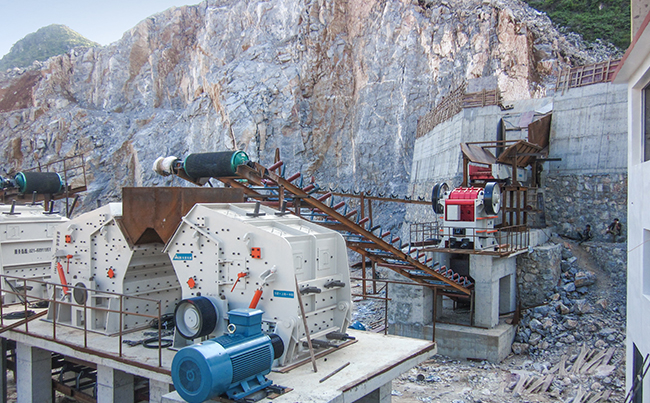
A fixed impact crusher specialized for aggregate shaping provides targeted solutions to the grain shape problem of highway base material production. Different from compression crushing equipment, impact crusher breaks rock by high-speed impact and counterattack collision. Materials hit impact liners and collide with each other inside the crushing cavity along natural cleavage planes. This crushing mode effectively cuts flaky and elongated grains and improves cubicity of finished aggregates. As stationary equipment, fixed impact crusher is designed for long-time continuous running in permanent aggregate production lines. It can be installed behind fixed jaw crusher or fixed cone crusher as tertiary shaping equipment, focusing on correcting particle shape rather than simply increasing crushing capacity. For limestone, dolomite and other medium-hard rock widely used for highway base, fixed impact crusher shows outstanding shaping effect with controllable wear consumption.
Consistent Grain Quality Meets Highway Sampling Inspection Rules
The core value of fixed impact crusher in highway aggregate lines is consistent grain quality batch by batch. Highway engineering inspection departments carry out random sampling on aggregate delivery. Once the flaky particle ratio exceeds the limit, the whole batch will be rejected. A properly configured fixed impact crushing system can keep flaky content within the required range steadily. The rotor speed and impact clearance can be adjusted flexibly according to different road standards. For expressway base material with stricter requirements, operators can narrow the counterattack gap and increase shaping times. For ordinary provincial highway base, parameters can be adjusted properly to balance output and shaping effect. Cooperating with fixed screening machine after impact crushing, oversize and poorly shaped particles are screened out and sent back to the impact crusher for re-shaping, forming a closed-loop shaping circulation. This process guarantees that all finished aggregates leaving the production line meet highway technical specifications.
Application Boundaries and Suitable Raw Material Types
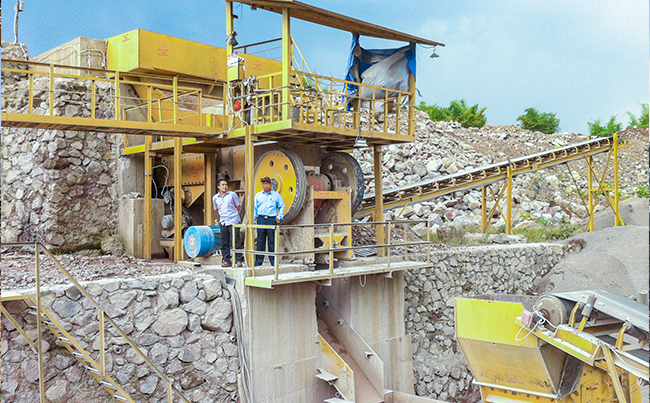
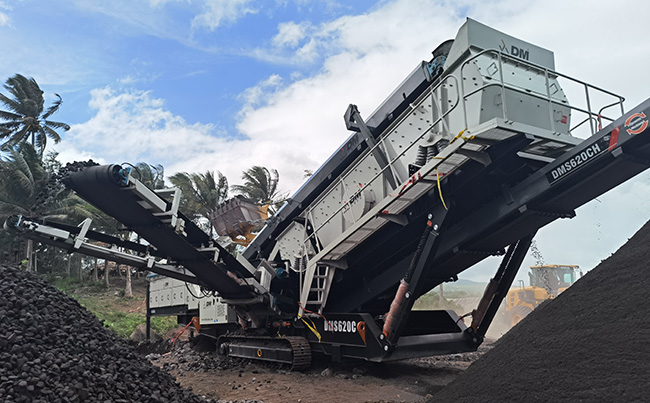
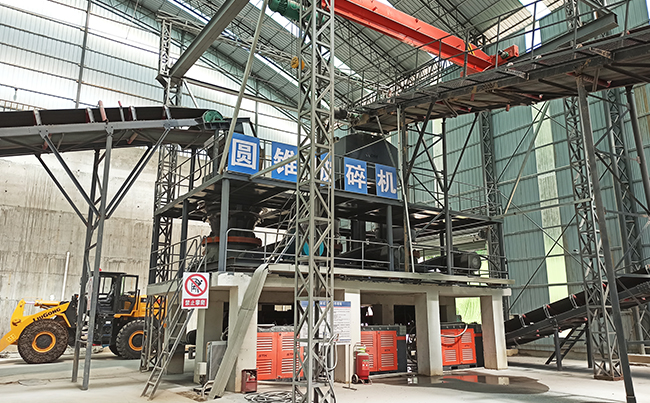
Fixed impact crusher has its most suitable application boundary in stationary aggregate plants. It is the preferred shaping equipment for production lines focusing on medium-hard rock and stable highway aggregate supply. It is not recommended for processing high-abrasion hard rock such as pure granite with extremely high silica content, because blow bars and impact plates will wear rapidly and push up operation cost. For these hard rock scenarios, customers usually take cone crusher as main crushing unit and only use impact crusher for fine shaping of part of materials. The fixed installation form allows users to connect it tightly with belt conveyors, buffer bins and dust removal systems. The whole production workshop can realize fully enclosed operation, which is convenient to reach industrial dust emission standards required by environmental protection departments. Compared with mobile impact units, fixed impact crusher has heavier frame structure, stronger rotor rigidity and can maintain stable running state under long continuous load.
Layout Design and Feeding Control Tips
Correct layout and feeding control decide shaping efficiency and service life of fixed impact crusher. Plant designers should reserve a steady feeding buffer bin before the crusher. Sudden feeding surge will cause rotor overload, violent vibration and uneven impact on wear parts. Material moisture content also needs control. Sticky wet raw materials easily adhere to impact liners and block the crushing cavity. If the feed contains high mud content, pre-washing equipment should be arranged in the front section to remove clay in advance. The foundation of fixed impact crusher must adopt shock absorption design. The impact force generated during operation is larger than jaw and cone crushers. Good damping can reduce vibration transfer to the workshop structure and extend service life of supporting conveyor and screening equipment.
Routine Maintenance to Control Operating Costs
Scientific maintenance plan controls operating cost of fixed impact crusher. Blow bar is the main consumable part. Operators should regularly check wear condition, rotate blow bars timely for even wear and replace them before they are worn thin. Impact apron, side liners and rotor locking components also need routine inspection. Loose liners will cause abnormal impact noise and risk liner falling off during operation. The rotor balance state is very critical; after replacing blow bars, dynamic balance calibration must be done. Unbalanced rotor will produce fierce vibration, damage bearing and shorten the whole machine’s service cycle. Lubricating oil of bearing seat should be replaced following the schedule, and temperature monitoring is required during continuous production.
Economic Benefits for Aggregate Suppliers Serving Road Projects
From economic analysis, adding fixed impact crusher to highway aggregate lines brings obvious quality premium. Qualified cubical aggregates for expressway base can be sold at higher unit price than ordinary crushed stone. The rejection rate drops greatly, avoiding the loss caused by rework and price reduction. Stable quality also helps aggregate plants sign long-term supply contracts with road construction groups. Although fixed impact crusher has investment on foundation, dust removal and conveyor connection, its long service cycle and continuous shaping capacity reduce the comprehensive cost per ton of qualified highway aggregates.
Conclusion
In conclusion, highway base aggregate production cannot only pursue high throughput while ignoring particle cubicity. Fixed impact crusher makes up the shaping defect of compression crushing equipment, controls flaky particle content and stabilizes finished aggregate quality. When users select suitable raw material range, design closed circulation with screening equipment and carry out regular inspection and replacement of wear parts, the fixed impact crushing unit will become reliable core shaping equipment for permanent aggregate plants that supply highway and municipal road projects.
Latest Updates
Follow Us
Keeping crushing and screening equipment running worldwide.
Sign Up To Newsletter
Subscribe to get the latest parts news.
Post Comment