

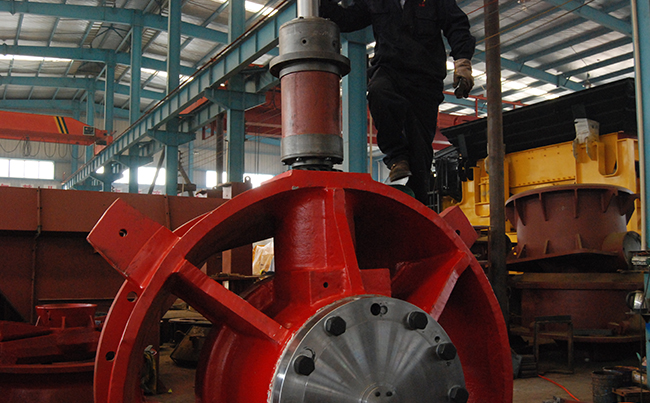
The manufactured sand market for concrete, asphalt and road construction demands strict grain shape, stable grading and low fines deviation. Many aggregate producers running VSI vertical shaft impact crushers keep facing recurring troubles: sand grains are flat and elongated, finished products fail acceptance inspection; rotor runs with heavy vibration; wear parts burn out quickly, and unplanned shutdowns delay delivery to ready-mix concrete plants. Most of these issues trace back to the vsi rotor assembly, the heart of sand shaping and rock-on-rock crushing. Operators often treat the rotor as a fixed component and only replace individual tips after failure, ignoring that rotor balance, internal liner structure and matching crusher spares together decide long-term production stability.

Common Pain Points of VSI Rotor Operation
The first typical problem is unbalanced rotor caused by partial wear. Many site maintenance workers only replace one worn rotor tip instead of a matched pair. Once mass distribution inside the rotor is uneven, strong vibration transfers to the main bearing, motor and machine base. Long-term vibration accelerates bearing clearance enlargement, loosens foundation bolts and even cracks the rotor body. Repairing a deformed rotor body costs far more than replacing standard vsi crusher parts on schedule.
Second, wrong rotor cavity design mismatches raw materials. For river pebble, granite and high-silica hard rock, open shallow rotors have extremely fast tip wear. While limestone and soft rock do not require heavy carbide protection. If operators use universal rotor assemblies across all feed materials, either the wear cost surges or sand shaping effect cannot meet specification.
Third, poor sealing and liner damage inside the rotor. When internal wear plates are worn through, high-speed rock particles scour the rotor base directly. Once the main rotor substrate is abraded, the whole assembly loses its interchange value. Many small quarries lack regular internal inspection, they only open the rotor cover after obvious performance drop.
Fourth, inconsistent sand quality. A worn rotor loses its original acceleration channel profile. Rocks get uneven kinetic energy when thrown out. Some particles crash weakly while others over-crush into excess fines. The finished sand fluctuates on fineness modulus, bringing complaints from concrete customers.
Targeted Solutions for Different Application Scenarios
For hard rock quarries producing high-standard manufactured sand, select rock-on-rock vsi rotor assembly with tungsten carbide rotor tips. The material lining formed inside the rotor protects metal surfaces, cutting direct abrasion significantly. This setup works well for basalt, granite and quartzite. The service cycle of wear components can be extended greatly, and cubical aggregate ratio rises above 90%, which fits high-grade highway and hydraulic concrete requirements.
For limestone quarries and soft stone processing lines, rock-on-anvil rotor structure is more suitable. It features higher throughput and lower energy consumption. Combined with high-chrome iron crusher wear part series, it controls the total operating expense without over-investing in expensive carbide components. This scheme is widely adopted by medium-sized aggregate plants focusing on ordinary commercial concrete sand.
For construction waste recycling projects, feed contains mixed brick, concrete blocks and occasional tramp steel. Reinforced thickened rotor liners and anti-impact rotor tip holders are required. The assembly must tolerate irregular impact from mixed materials and reduce sudden fracture risks.
Standard Maintenance Workflow for VSI Rotor Assembly
Before every rotor opening inspection, lock out the power source and clean residual materials inside the cavity completely. Check all rotor tips, upper and lower wear plates, distribution plate and feed tube liner at the same time. When any tip is chipped or carbide falls off, replace the opposite paired tip together to maintain dynamic balance. Never run the crusher with mismatched crusher spares.
Record working hours and wear thickness of each set of wear components. Establish replacement schedules according to feed abrasiveness: hard silica rock may need inspection every 150–300 operating hours; soft limestone can run more than 800 hours between tip changes.
Check rotor bolt torque regularly. High-speed rotation will gradually loosen fixing bolts. Loose components inside the rotor are a major safety hazard. After every wear part replacement, perform vibration testing before full-load production. If vibration value exceeds the equipment threshold, recheck balance immediately.
Economic Benefits for Aggregate Operators
A balanced, well-maintained vsi rotor assembly brings two core returns: stable product quality and reduced downtime. Consistent cubical sand can be sold at a premium price compared with irregular crushed sand. Scheduled wear-part replacement avoids emergency breakdowns which often delay bulk orders.
For a typical 200 tph sand making circuit, proper rotor management can reduce annual wear spending by 25% to 35%, and cut unplanned downtime by more than half. Many quarry owners underestimate the ROI of standard rotor maintenance, because the saving accumulates steadily month by month.
Conclusion
The vsi rotor assembly is not simply a rotating metal frame. It defines grain shape, throughput, vibration level and the service life of other vsi crusher parts. Whether you run a dedicated sand quarry or a construction waste recycling plant, matching rotor structure, wear material and maintenance cycle to your feed characteristics is the most reliable way to stabilize production. Regular inspection, paired replacement and balance testing will help you avoid expensive rotor body damage and keep your manufactured sand product competitive in the market.
Latest Updates
Follow Us
Keeping crushing and screening equipment running worldwide.
Sign Up To Newsletter
Subscribe to get the latest parts news.
Post Comment