

Quarry owners and production managers across the aggregates industry routinely assume that a bigger machine is a cheaper machine. When a tracked mobile impact crusher carries a higher tonnes-per-hour rating, the natural conclusion seems simple: more tons out means lower cost per ton. This logic is embedded in many capital approval meetings, fleet replacement reviews and tender evaluations. Yet in real aggregate operations, especially in the South African market where cash flow discipline decides whether a quarry survives a downturn, the assumption regularly breaks down. A higher capacity tracked mobile impact crusher can deliver a higher unit cost than a smaller, better matched machine, once effective runtime, planned and unplanned downtime, product yield and full lifecycle expenditure are counted together. Nameplate throughput is only the starting point of a cost model, not the conclusion. This article explains why capacity and unit cost often move in opposite directions, and gives quarry operators, production managers and procurement leads a practical framework to judge whether a capacity increase truly improves cash flow or merely increases capital exposure.

Nameplate Capacity Measures Potential, Not Actual Output
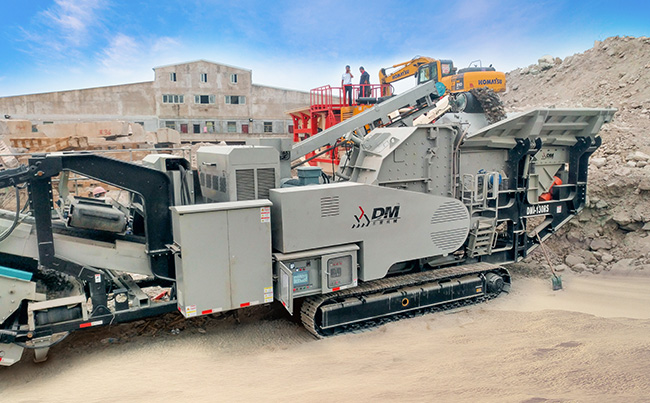
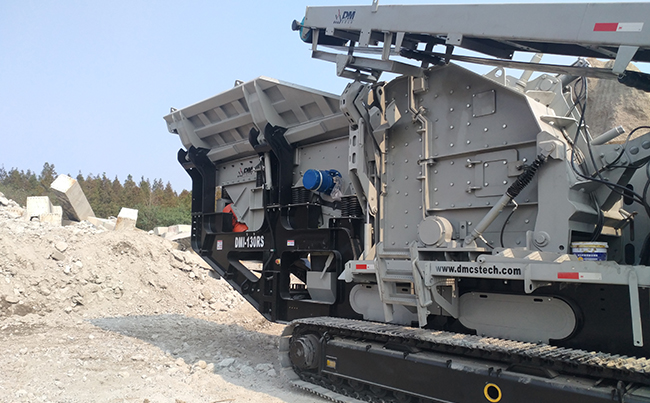
Every capacity figure printed on a crusher datasheet represents potential output under controlled conditions. For a tracked mobile impact crusher, that rated figure assumes a specific feed material, a defined reduction ratio, an ideal feed gradation, continuous feeding and a downstream circuit that accepts all discharge material without stopping the machine. In a working quarry, none of these assumptions hold every day. Blast quality changes, moisture levels shift with the seasons, clay content fluctuates between zones, and feed size distribution varies with the excavator and loading team. Unit production cost is calculated on actual tonnage sold, not theoretical tonnage crushed. If the machine frequently runs below its rated throughput because feed or site conditions are not ideal, the fixed costs of ownership are spread across fewer tons, and the cost per ton rises even though the machine is the same one that looked cheap on paper. A tracked mobile impact crusher purchased purely on headline capacity can therefore sit idle, wait for feed or choke on variable material, while a smaller unit matched to the real feed keeps producing steadily.
Effective Runtime, Not Rated Throughput, Drives Unit Cost
The single most important figure for a cash flow focused quarry is effective runtime, defined as the hours the plant actually produces saleable product against the hours available. Many operators measure performance in tonnes per hour and ignore the fraction of time the machine runs. Two impact crushers with identical rated capacities can produce very different tonnages in a month because one runs for fourteen hours a day and the other is down for six. Fuel consumption, crew cost, site overhead and machine finance charges accrue whether the crusher runs or stops. When these fixed costs are divided across fewer effective hours, unit cost climbs. A tracked mobile impact crusher with a higher rating but a lower effective runtime because of waiting time, setup and relocation, or feeding bottlenecks can easily cost more per ton than a lower rated unit that runs close to full effective hours. Production managers should track effective runtime, utilisation rate and actual tons sold per week, not the peak hourly figure, before deciding that a capacity upgrade will reduce unit cost.
Downtime and Maintenance Planning Change the Whole Picture
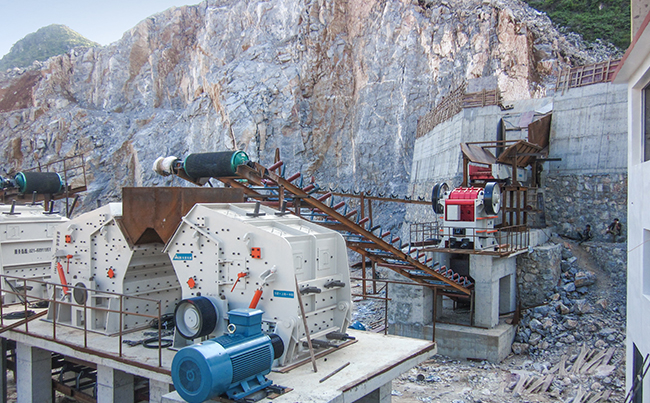
Higher capacity machines are not automatically more reliable, and their maintenance events are not automatically cheaper. A larger tracked mobile impact crusher carries heavier wear parts, bigger bearings, larger drive components and higher replacement part prices. When the machine is down for planned liner changes, the bigger size means longer change-out hours and more lost production. When unplanned failures happen, bigger components often mean longer repair time and higher spare part stock requirements. Maintenance windows that were acceptable for a compact unit can become unmanageable for a high capacity machine, particularly in remote South African quarry locations where technicians and spare parts take time to mobilise. Every hour of downtime is paid for twice: once in the lost production it causes, and once in the standing costs that continue during the stoppage. Comparing unit cost across machines therefore requires a full maintenance plan, including expected wear life, change-out labour, spare parts availability and predicted availability. A slightly lower rated impact crusher with a predictable, fast maintenance cycle can deliver a better unit cost than a higher capacity machine that sits in the workshop. Crushers such as a tracked mobile impact crusher or a fixed impact crusher should be evaluated with their complete maintenance and reliability profile, not their headline tonnage.
Yield and Product Quality Decide Saleable Output
Unit production cost should be measured against saleable, on-spec product, not against total crusher output. In the aggregates industry, product yield is the percentage of material that meets the required specification and can be sold at the target price. A tracked mobile impact crusher set for maximum throughput often produces a wider size distribution, more oversize and more fines. If the oversize has to be recrushed and the fines have to be stockpiled, screened out or sold at a discount, the effective yield drops. A machine producing 500 tons per hour with a 75 percent saleable yield is worth less than a machine producing 400 tons per hour with a 90 percent saleable yield, once yield is translated into revenue. Over-processing, poor product shape and unstable gradation also trigger customer complaints and rework in road and hydraulic engineering contracts, which adds cost and damages the operation's reputation. For quarry operators managing cash flow, the right metric is saleable tons per hour at the correct specification, adjusted for recrushing and discards. A high capacity impact crusher that generates excessive recirculating load inside the circuit, with the tracked mobile screening machine or fixed screening machine struggling to keep up, will burn more energy and labour while producing less net saleable output.
Feed Conditions and Downstream Balance Limit Real Capacity
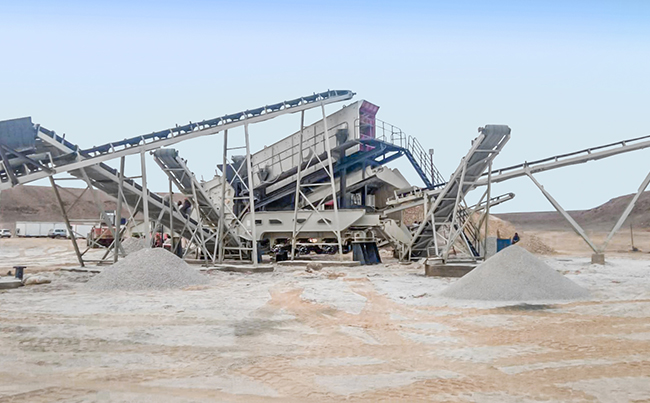
No crusher operates in isolation, and the real capacity of a tracked mobile impact crusher depends on everything around it. Feed must be delivered at the right rate and size, and the discharge must be accepted by the next stage. If the feeding system is undersized, the crusher starves and never reaches its rated output. If the screening or conveying system downstream is too small, the crusher must throttle back to avoid choking. In a mobile setup, the tracked mobile impact crusher often works with a tracked mobile screening machine to form a closed circuit, and the circuit's capacity is set by the weakest link. Adding a high capacity crusher to a circuit whose screen and conveyors can only handle half the tonnage simply raises capital cost without raising output. Production managers must review the whole circuit balance before approving a capacity upgrade. In many cases, a modest crusher paired with a well matched screen and stable feed delivers a better unit cost than an oversized crusher trapped behind a bottleneck. The engineering question is not which machine has the highest rating, but which combination produces the required gradation most efficiently at the required effective runtime.
Fuel, Power, Logistics and Site Constraints
Operational cost includes more than maintenance and labour. A larger tracked mobile impact crusher typically consumes more fuel per hour, and in many South African quarry sites fuel is a major operating line item. Higher power draw may also require a larger generator or more robust electrical infrastructure, which raises both capital and running costs. Transport and relocation are another hidden cost. A bigger, heavier machine needs heavier trailers, wider road permits and more time to move between faces, stockpiles or satellite sites. For an operation that relocates the crusher regularly, a compact unit with faster mobilisation can complete more work in the same week than a large machine that spends an extra day on transport and setup. Tyres, undercarriage wear and mobile platform components add further costs that a simple tonnes-per-hour comparison completely ignores. When quarry owners compare a tracked mobile impact crusher against a fixed impact crusher, or against a smaller mobile unit, they should build a total cost model that includes fuel, transport, relocation, power and road access, alongside the equipment purchase price and wear parts.
Lifecycle Cost Is the Real Comparison Basis
Short-term throughput comparisons are misleading because they ignore the full lifecycle. Total cost of ownership includes acquisition, installation, fuel, power, wear parts, labour, planned and unplanned maintenance, spare parts inventory, residual value and the cost of downtime. A high capacity machine with a low purchase price can become the most expensive option once its maintenance burden, fuel consumption and downtime are added across five or ten years. Conversely, a higher quality machine with a slightly lower rating can deliver the lowest unit cost over its life because it runs longer, wears more slowly and holds its value. Procurement decisions made on first-year purchase price or headline throughput routinely miss these lifecycle costs. For aggregate businesses managing cash flow in the South African market, where margins are tight and market offtake fluctuates, the ability to scale production up and down without absorbing excessive fixed cost is often more valuable than the ability to crush a high tonnage at peak conditions.
Demand and Market Offtake Shape the Right Capacity
A quarry does not set its crusher capacity from a datasheet. It sets capacity from the demand it can actually sell. If the market only absorbs a limited tonnage per month, buying a machine that can produce far more than the offtake simply locks up capital in capacity that never earns a return. For a tracked mobile impact crusher purchased to serve a specific project or a defined market window, the correct capacity is the one that matches expected demand with a reasonable margin, not the largest available unit. Oversized equipment also forces the operation to run fewer hours at higher rates, which stresses the machine and increases wear, or to run at part load, which is inefficient. Cash flow focused quarry operators match installed capacity to sustainable market demand and effective operating hours, and they reinvest the savings into reliability, product quality and working capital instead of unused tonnage.
Conclusion: Higher Capacity Does Not Guarantee Lower Unit Cost
The belief that a higher rated tracked mobile impact crusher automatically reduces unit production cost is one of the most expensive assumptions in the aggregates industry. Unit cost is determined by effective runtime, planned and unplanned downtime, maintenance burden, saleable yield, downstream circuit balance, fuel, transport and full lifecycle expenditure, not by the tonnes-per-hour figure printed on the datasheet. For quarry owners, production managers and procurement leads, the correct approach is to build a complete operating cost model around actual site data, track saleable tons per week, monitor utilisation and yield, and compare total cost of ownership before approving a capacity upgrade. In the South African aggregate market, where cash flow stability determines long-term survival, a well matched, reliable and maintainable impact crusher almost always beats a bigger machine that cannot run effectively. Capacity is a tool, not a target. The quarry that earns a healthy margin on fewer, well planned tons is financially stronger than the quarry that produces a high tonnage at a loss, and that difference shows up in the cash flow statement long before it shows up in the equipment spec sheet.
Related Tags
Impact Crusher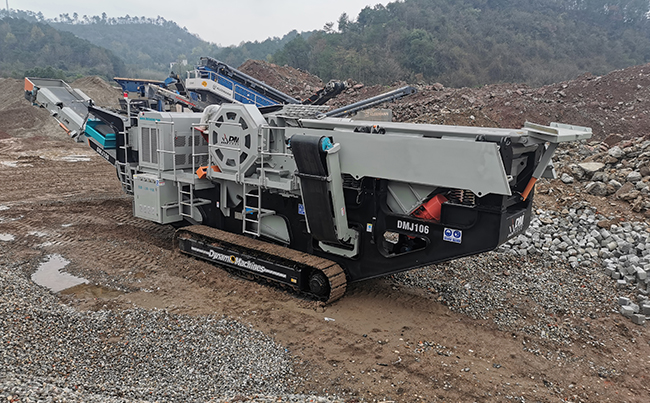
Latest Updates
Follow Us
Keeping crushing and screening equipment running worldwide.
Sign Up To Newsletter
Subscribe to get the latest parts news.
Post Comment