

Road and municipal engineering projects frequently encounter material handling headaches. Traditional stationary screening plants require raw stones to be transported to fixed crushing and screening workshops, then finished aggregates hauled back to construction sites. Round-trip freight takes up a large share of total project expenditure. Temporary construction sites also have short operation cycles and frequent relocation demands. Disassembling, transporting and reassembling stationary screening equipment consumes plenty of time and labor. Limited site space, complicated terrain and poor road access further restrict the deployment of conventional screening systems. In this scenario, Mobile Screening Machine on tracked chassis becomes a flexible on-site sorting solution. It can move freely on rough ground, finish multi-size material classification directly at quarry or construction site, greatly reduce material transportation volume and help road & municipal contractors control overall project budget. This article discusses common screening pain points, introduces working principle of tracked mobile screening machine, lists typical application scenarios, analyzes economic benefits, equipment selection criteria and routine operation maintenance advice.

1. Main Screening Difficulties in Road and Municipal Construction
Many road and municipal projects adopt off-site aggregate processing mode, which brings several obvious drawbacks. The first problem is expensive material transportation. All raw rock needs truck delivery to fixed screening station, and qualified aggregates are shipped back to job sites. When the construction zone spreads across multiple locations, cumulative transport expenses rise rapidly and eat into project profits. The second challenge is slow site transition. Stationary screening machines need full disassembly before relocation. The whole process may take several days or weeks, causing construction suspension and delaying project schedules. Thirdly, uneven finished material grading is common. Conventional screening equipment is prone to screen mesh clogging when processing wet, sticky materials. Blockage reduces screening efficiency and leads to mixed particle sizes, failing to meet grading requirements of road base materials. Fourth, limited space on urban construction sites. Urban municipal sites usually have narrow working areas, and large fixed screening lines cannot be installed due to space constraints. Noise and dust limits in urban areas also bring higher requirements for construction equipment. All these problems trouble contractors undertaking short-cycle, multi-location road and municipal projects.
2. Working Principle & Solution of Tracked Mobile Screening Machine
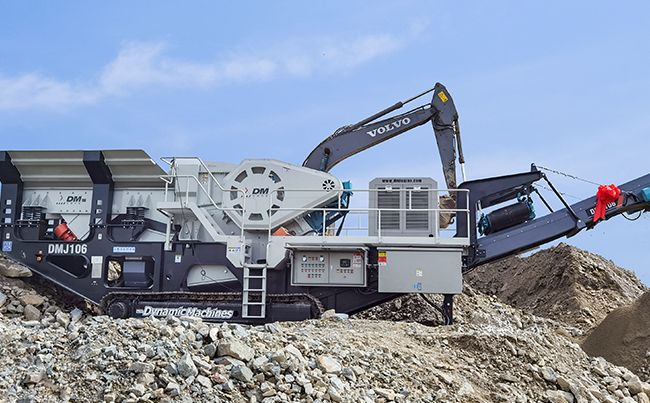
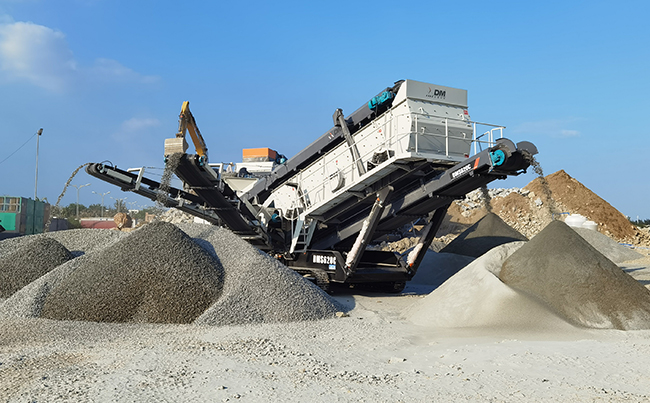
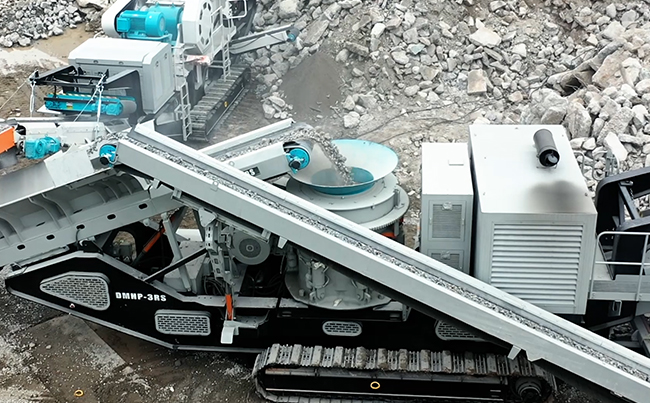
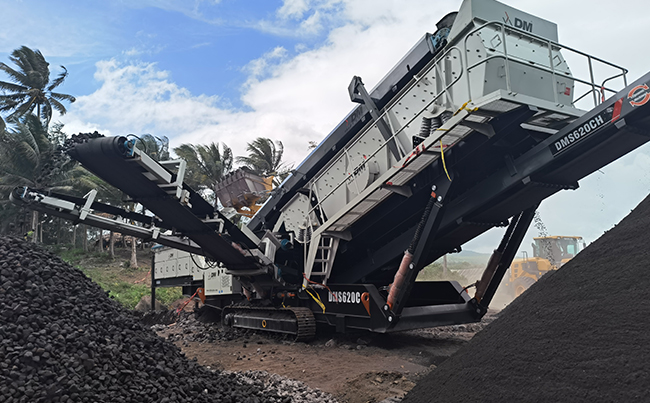
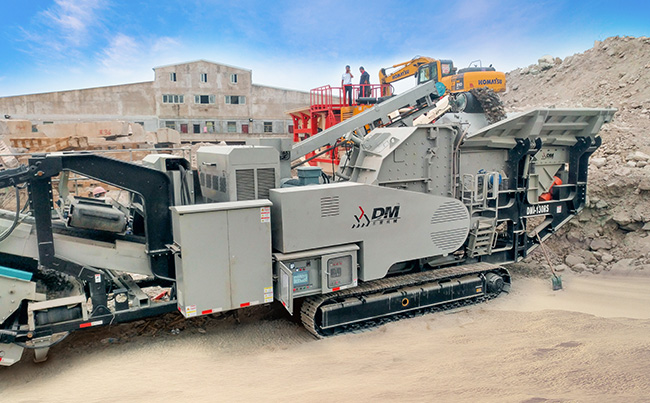
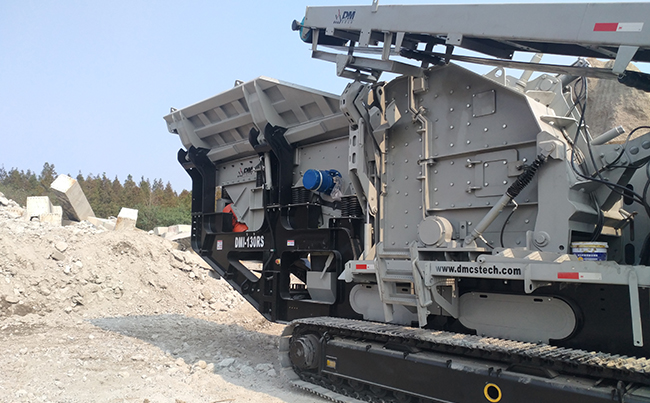
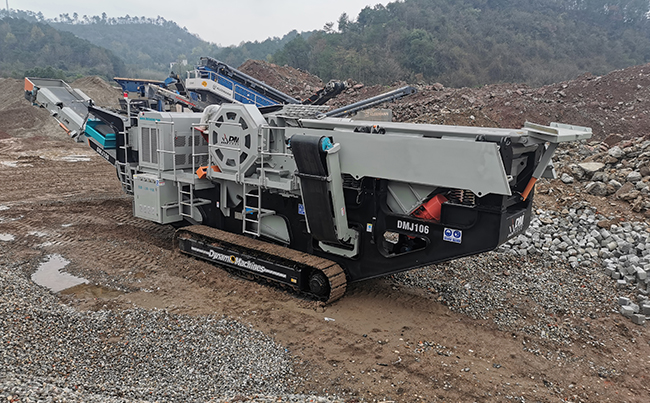
The tracked Mobile Screening Machine integrates feeding system, vibrating screen unit, tracked walking chassis and control cabinet into one compact unit. Powered by diesel engine or electric motor, it can travel independently on rugged, muddy and sloped construction sites without trailer transportation. Raw materials enter the screen deck through the feeding hopper. Multiple layers of screen meshes separate stones into different particle sizes at the same time. Oversized materials can connect with crusher to form a closed-loop crushing and screening system. After sorting, qualified aggregates can be directly used on site without long-distance trucking.
Tracked chassis adopts heavy-duty crawler design, adapting to muddy ground, mountain slopes and uneven temporary job sites. Hydraulic lifting structure allows quick adjustment of feeding and discharging angles. Operators can change screen mesh specifications easily to produce different aggregate fractions according to project requirements. Enclosed dust reduction covers and noise reduction structure can be fitted optionally to satisfy urban municipal environmental standards. Compared with stationary screening lines, tracked Mobile Screening Machine requires no concrete foundation, saving foundation construction cost and preparation time. Once one construction section is completed, the whole machine can move to next working area within short time, avoiding repeated equipment disassembly and installation work.
3. Typical Application Scenarios
The first scenario is highway and rural road construction sites. Road projects need large quantities of graded aggregates for road base and subbase. Mobile Screening Machine processes crushed stones on site. Finished aggregates are directly used for road paving, cutting truck transport distance and lowering fuel and labor cost. The crawler design adapts to temporary rough access roads at road construction zones.
The second application is urban municipal renovation and road repair. Municipal projects are usually located in city areas with strict environmental rules and limited workspace. Compact tracked Mobile Screening Machine can work in narrow urban sites to screen recycled construction waste or natural aggregates. Recycled materials can be reused for backfill and road bedding, supporting urban solid waste recycling policies.
The third scenario is small quarry temporary operation. For small-scale or short-term quarry exploitation, building a full stationary screening plant is uneconomical. Tracked Mobile Screening Machine can be deployed quickly for temporary material classification. After mining work finishes, the machine can be transferred to another quarry conveniently without complicated dismantling work.
4. Cost Saving & Project Benefits
The most prominent advantage of Mobile Screening Machine is the sharp reduction of material transportation cost. Processing materials on site eliminates repeated long-distance hauling of raw stones and finished aggregates, cutting truck rental, fuel and driver expenses significantly. Next, it saves site preparation and foundation investment. No permanent concrete foundation is needed, so contractors do not spend money on civil engineering. Fast relocation greatly shortens project downtime between different work zones, improving overall construction progress. The flexible screening configuration can produce multiple aggregate sizes in one pass to meet different engineering technical indexes. For municipal waste recycling projects, on-site screening turns demolition waste into reusable materials, reducing waste landfill charges and generating extra revenue. Meanwhile, compact structure and optional dust suppression modules help contractors pass environmental inspections smoothly and avoid construction shutdown penalties. Stable material grading improves aggregate quality, reducing rejection risks during project acceptance.
5. Key Points for Equipment Selection
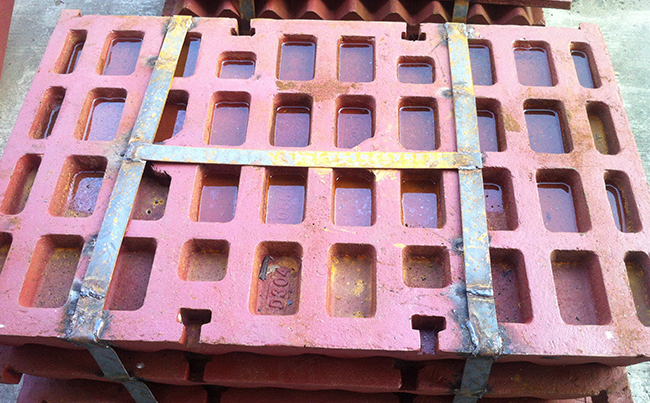
Contractors need to evaluate multiple factors before purchasing tracked Mobile Screening Machine. First, confirm material characteristics including rock hardness, moisture and stickiness. Sticky wet materials need anti-clogging screen mesh design. Second, define required hourly output and finished aggregate grades, select proper screen layers and mesh sizes. Leave reasonable capacity margin to prevent overload operation. Third, survey site terrain. Steep or muddy sites require heavy-duty tracked chassis with strong traction performance. Fourth, choose power mode: diesel engine for sites without stable power supply, electric drive for projects with power available to cut running cost. Fifth, inspect after-sales service and spare parts supply. Select models with easy access for screen mesh replacement and routine inspection. Prepare quick-wear spare parts like screen meshes and rubber springs to minimize standby time.
6. On-site Operation & Preventive Maintenance
Safe and stable running of Mobile Screening Machine relies on standardized operation and regular maintenance. Before startup, operators should check screen mesh fastening condition, crawler belt tension, hydraulic oil level, engine oil and feeding hopper for stuck debris. Run no-load test to check abnormal vibration and noise before feeding materials. Keep stable and uniform feeding speed to avoid material accumulation on screen deck. Avoid oversize hard blocks entering the screening unit to protect screen meshes. Inspect screen meshes, rubber springs and vibration exciter regularly. Replace worn components in advance to guarantee screening precision. Clean material residues after each working shift to prevent material hardening and mesh blockage. Check crawler tracks for wear, mud and stones stuck in tracks periodically. Record daily running hours, fuel consumption and fault logs. Conduct full maintenance before long-distance relocation. Follow site safety regulations during operation, and keep maintenance work done after power cut and machine shutdown.
7. Conclusion
Road and municipal construction projects feature scattered working points, short construction cycles and strict budget control. Traditional off-site screening brings high transport expense and slow relocation speed, which cannot match the flexible demands of modern infrastructure construction. The tracked Mobile Screening Machine integrates mobility and multi-grade material classification. It directly screens raw materials and recycled waste on construction sites, effectively cutting material transport cost and simplifying site deployment. With proper model selection, standardized operation and periodic maintenance, contractors can obtain consistent qualified aggregates, shorten construction periods and reduce total project expenditure, while meeting local environmental requirements. When planning mobile aggregate processing solutions for road or municipal projects, buyers should not only focus on machine price, but also assess terrain adaptability, screening efficiency and long-term maintenance cost. Choosing suitable tracked mobile screening equipment is an effective way to control budget and raise profit for road and municipal contractors.
Related Tags
Tracked Mobile Screening Machine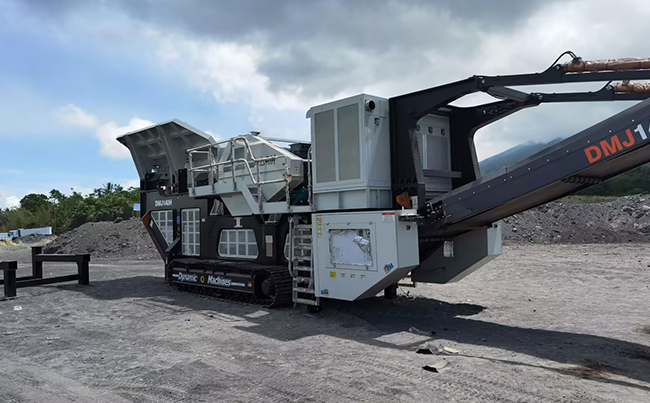
Latest Updates
Follow Us
Keeping crushing and screening equipment running worldwide.
Sign Up To Newsletter
Subscribe to get the latest parts news.
Post Comment